
Going Back to Work? How to Prepare Your Dog
If you’ve been working from home or spending more time with your dog, the thought of returning to a regular office schedule might hit differently—and your dog will definitely feel it too. When your routine changes, your dog’s world changes, and they don’t always handle that shift smoothly. But here’s the good news: with some thoughtful prep work, you can help your dog adjust to being alone without the stress and anxiety that sometimes comes along. So where do you start?
Why Routine Changes Affect Dogs
Dogs are creatures of habit. A sudden change in their routine can be unsettling, and when you flip from being home all day to leaving for eight hours, your dog experiences something that feels pretty dramatic from their perspective.
Dogs are very social animals. They would naturally live in family groups and have ‘evolved’ alongside humans over thousands of years to ‘work’ with us and live as our companions. Most dogs would choose to spend the majority of their time in our company. That closeness you’ve built—those hours of company and attention—becomes a baseline your dog expects. When it suddenly disappears, they don’t understand why or when it’s coming back.
An abrupt change in schedule in terms of when or how long a dog is left alone can trigger the development of separation anxiety. This isn’t about your dog being difficult or needy. It’s a real stress response. A dog experiencing separation anxiety is similar to a human having a panic attack.
How to Prepare Your Dog
The best way to help your dog adjust is to ease them into their new reality gradually. You don’t want to go from zero absences to a full workday overnight.
- Start with short absences. Gradually increase the time you leave your dog alone in the house to about half an hour over a period of days. Return after a few minutes (before your dog starts to become anxious). Gradually increase the time you leave your dog alone in the house to about half an hour over a period of days. If your dog shows any sign of worry, take a few steps back and start from where they were last comfortable. Think of it like teaching someone to swim—you start with their toes in the water, not the deep end.
- Desensitize departure cues. Teach your dog that when you pick up your keys or put on your coat, it doesn’t always mean that you’re leaving. Try grabbing your keys and then just sitting on the couch. Put on your coat and make a snack. This breaks the automatic “oh no, they’re leaving” reaction your dog builds up.
- Build a consistent routine. Dogs love routine, so try to keep consistent departure and return times. This predictability can help lower their anxiety levels. If you’re going back to work Monday through Friday at 9 a.m., even on weekends, stick to similar times for a few weeks while training.
- Exercise before you leave. Exercising your dog for 30 minutes prior to leaving and ignoring them for 10 minutes after you return can help them calm down. A dog who’s burned off energy is much more likely to rest while you’re gone than one who’s been sitting around waiting.
- Keep arrivals and departures low-key. By keeping hellos and goodbyes calm, you are signaling to your anxious pet that there is nothing to worry about while you are gone. Don’t go over the top with your departure and return. Calmly say goodbye when you leave and, when you return, calmly greet them. Big emotional goodbyes actually make dogs more anxious, not less.
- Use a safe space and distractions. An effective way to use a dog toy to treat canine anxiety is to stuff a hollow rubber chew toy with something tasty like cream cheese, peanut butter, banana, or canned dog food. A “snuffle mat” with dry treats hidden inside also works well. The goal is to give your dog something that will keep them busy for 20-30 minutes. Give this toy only when you’re leaving, so it becomes associated with something good.
The key is patience. Helping a dog get past separation anxiety takes time and patience—unfortunately, there’s no such thing as a quick fix for stress-based behaviors. Don’t rush the timeline or skip steps just because you’re on a deadline to return to the office.
Preventing Separation Anxiety
While you’re learning how to prepare your dog for being alone, it’s important to know the difference between normal adjustment and true separation anxiety. Usually, right after a guardian leaves a dog with separation anxiety, the dog will begin barking and displaying other distress behaviors within a short time after being left alone—often within minutes. Watch for signs like dilated pupils, panting, yawning, salivating, trembling, pacing and exuberant greeting.
A consistent daily routine can help your dog establish expectations for when they will receive attention and when they will be alone. Teach your dog calming behaviors, such as “settle,” by rewarding them for relaxing in a specific location, such as a mat or crate, and gradually increasing the amount of time they spend there. This teaches your dog that alone time is normal and safe.
One thing to avoid: punishment. Never punish your dog—this will only increase their anxiety and worsen unwanted behaviors. If you come home to accidents or destroyed items, that damage happened hours ago. Scolding your dog now only teaches them to be anxious about your arrival.
Dog anxiety at home takes many forms. Some dogs will bark or howl, others become destructive, and some get so stressed they have accidents inside. Understanding that these aren’t behavior problems or signs of spite, but actual distress responses, changes how you approach training.
If you notice your dog is struggling despite your best efforts, don’t hesitate to reach out to your vet. Schedule a check-in with your vet. Your vet can confirm that the symptoms you’ve noticed are really caused by separation anxiety and not a medical problem that needs attention. Plus, they’ll be able to make specific treatment recommendations for your dog and help guide you when it comes to fitting training into your lifestyle. In some cases, your vet might recommend working with a certified separation anxiety trainer (CSAT) or veterinary behaviorist for a more structured approach.
FAQ
How long does it take for a dog to adjust to a new schedule?Every dog is different, so there’s no exact timeline. Some adjust within weeks, others need months. Unfortunately, there’s no exact timeline for when to expect your dog’s behavior to improve, since each dog is different. Stay consistent with your routine and go at your dog’s pace.
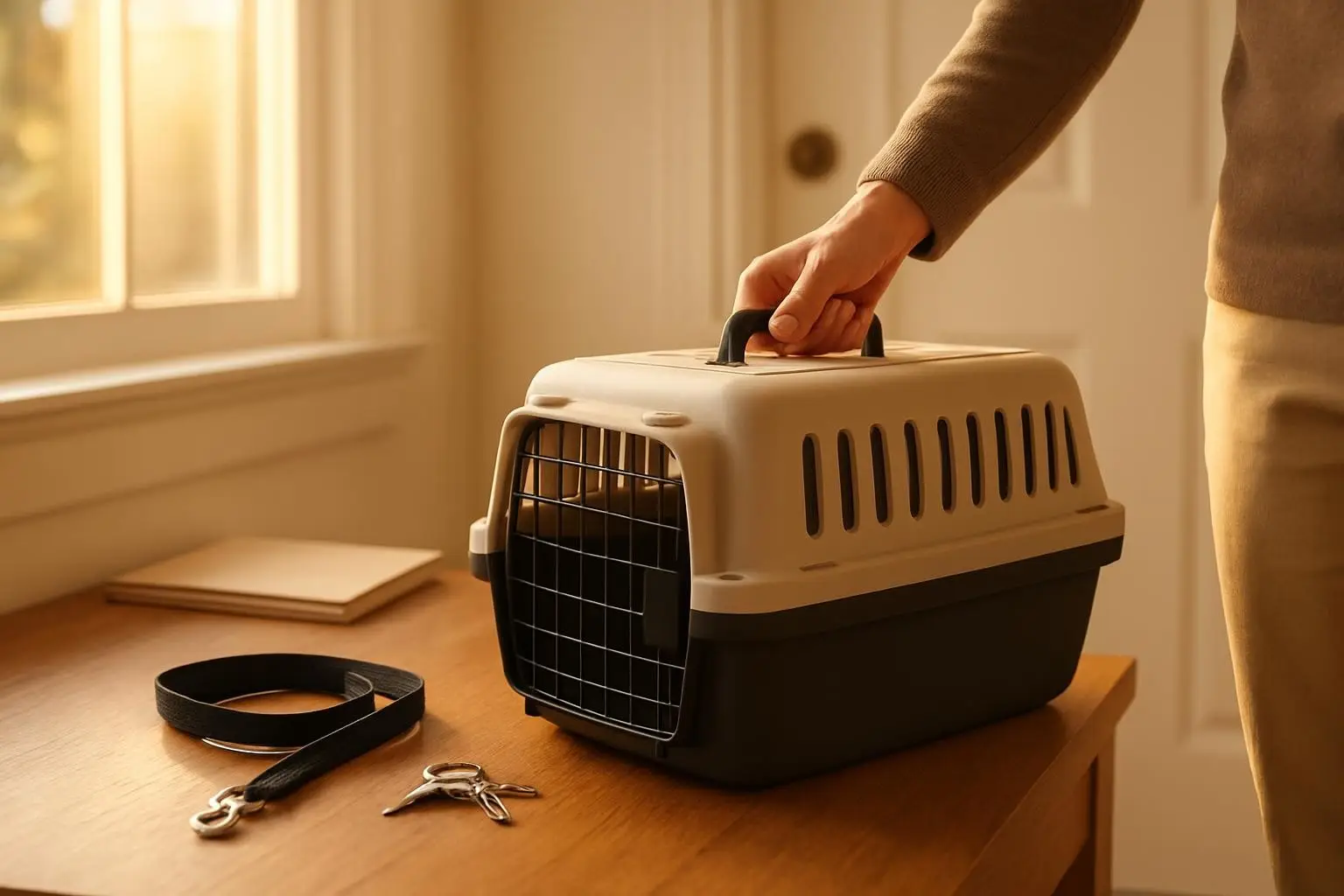
Can I use a crate to help my dog when I’m away?A crate can work, but only if your dog feels safe in it. A crate can be helpful but may worsen your dog’s anxiety if they are hesitant. Never force your dog to use their crate. Make sure the crate is something your dog loves, not something you use as punishment.
Is my dog’s behavior actually separation anxiety or just boredom?The difference is intensity and timing. Separation anxiety is the result of legitimate stress, unlike boredom. Bored dogs might have accidents or chew things up, but they do it calmly over time. Anxious dogs panic immediately, often within minutes of you leaving.
What if my dog still struggles even after I’ve tried everything?Some dogs need extra support. Dogs with separation anxiety tend to respond best to multimodal treatment, which means using a combination of different tactics to treat their anxiety. This might include behavior training, medication from your vet, environmental changes, and possibly professional help.
How do I know if my dog is ready for longer absences?Watch their body language and behavior. If they’re calm, relaxed, and not showing stress signs when you leave, that’s a good indicator they’re ready to handle a bit more time alone. Always increase duration gradually, and if your dog shows signs of stress, scale back and progress more slowly.