
Pet-Proofing by Room: A Room-by-Room Guide for Renters
Bringing a pet into your rental apartment is exciting, but it also means thinking strategically about how to keep your furry roommate safe while protecting your security deposit. Every room in your space has its own hazards and challenges, and the good news is that a little preparation goes a long way. So how do you pet proof apartment room by room without major renovations?
Kitchen
The kitchen is where food and hazards collide, making it one of the most important rooms to secure.
Food Storage
- Store all pet food, human food, and snacks in sealed, airtight containers or high cabinets where curious noses can’t reach them.
- Keep toxic foods (chocolate, grapes, xylitol-sweetened items, onions) completely out of reach on high shelves or in locked drawers.
- Never leave food out on counters, even for a moment—pets are fast.
Trash and Waste
- Use a trash can with a locking lid or store trash inside a latched cabinet.
- Empty trash regularly, especially after meals, since discarded bones, packaging, and spoiled food pose choking and toxicity risks.
- Keep compost bins secured or inaccessible.
Cabinets and Chemicals
- Install childproof latches or magnetic locks on all lower cabinets, especially those storing cleaning products, dish soap, and laundry supplies.
- Store cleaning chemicals on high shelves whenever possible.
- Keep sharp utensils (knives, skewers, scissors) in locked drawers or on high shelves.
Appliances and Hot Surfaces
- Keep the oven door closed and consider a stove guard to prevent burns.
- Never leave the stovetop unattended while cooking.
- Cover gaps between appliances where small puppies or kittens might squeeze.
Living Room
This is where you and your pet likely spend the most time together, so making it safe and comfortable matters.
Cords and Electronics
- Secure all electrical cords, charging cables, and phone chargers with cord covers or cable organizers.
- Move cords away from chewing reach whenever possible.
- Anchor televisions and secure entertainment centers to prevent tipping if your pet climbs or pushes against them.
Furniture and Decor
- Move fragile items, decorative objects, and knick-knacks to high shelves or secure cabinets.
- Use furniture straps to anchor bookcases and tall dressers to wall studs, especially if your cat likes to climb or your dog is likely to nudge things.
- Secure tablecloths so they can’t be pulled down.
- Remove or secure any dangling curtain cords, as these pose strangulation or ingestion risks.
Plants
- Remove toxic houseplants like lilies, sago palms, and oleander entirely, or place them on high shelves completely out of reach.
- If you keep plants, research each one against a pet toxicity list first.
- Keep non-toxic plants stable so they won’t tip over if knocked.
Comfortable Setup
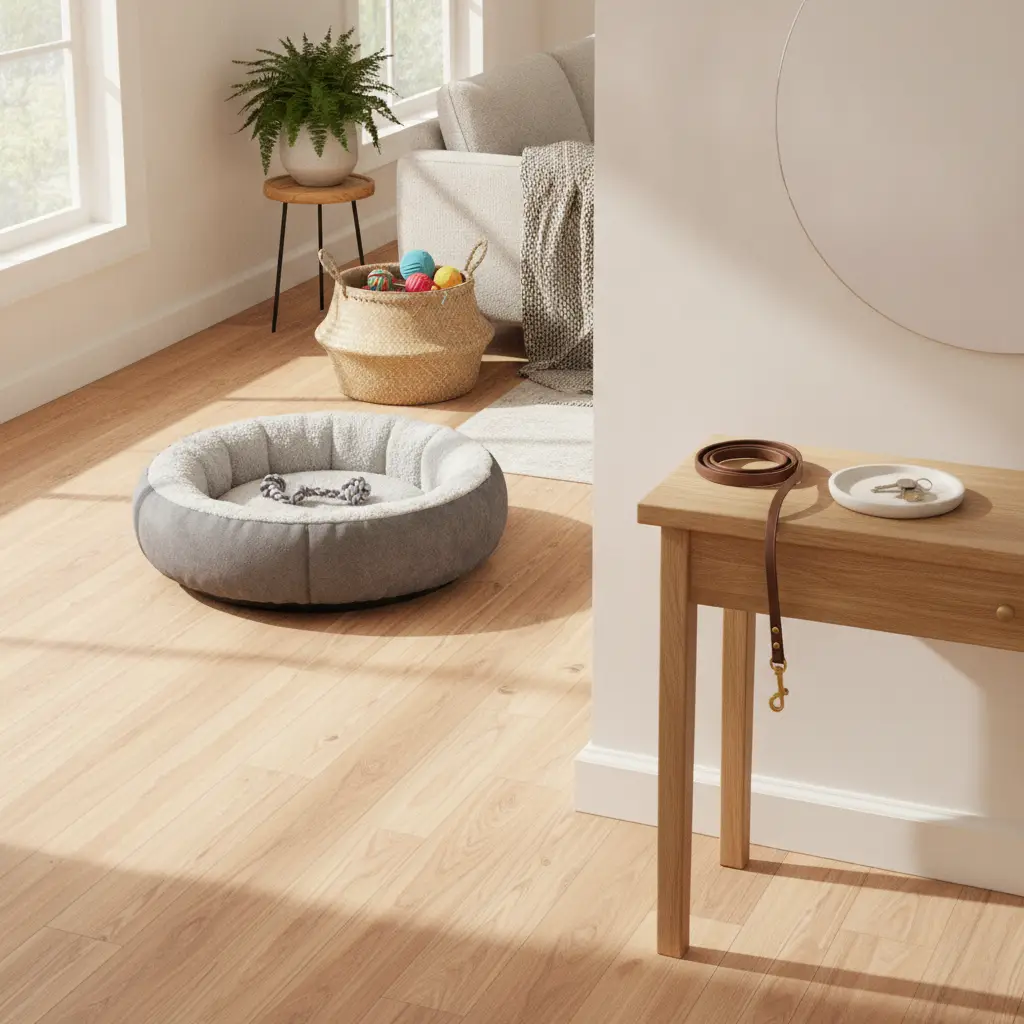
- Store chew toys and pet supplies in accessible, organized containers so your pet has safe outlets for play.
- Create a designated pet bed or crate in a quiet corner where your pet can feel secure and retreat.
- Consider slipcovers or washable throws on furniture to protect against fur, drool, and accidents.
Bedroom
Bedrooms can pose unexpected hazards, especially when you’re not supervising.
Personal Items and Choking Hazards
- Keep jewelry, hair accessories, hair ties, and lip balms in drawers or closed containers.
- Store loose socks, underwear, and other small fabric items in closed drawers—these are choking hazards.
- Clear nightstands of medications, lotions, and fragile items.
- Keep hangers, belts, and small objects off the floor and in closets.
Cords and Safety
- Use chew-proof cable protectors on any cords near the bed or dresser.
- Make sure closet and dresser doors close securely so pets can’t get trapped inside.
Cleaning Products and Hazards
- Keep mothballs and other pesticides completely out of reach or avoid using them altogether.
- Avoid using products with strong chemical odors; pets have sensitive noses and lungs.
Under the Bed and Furniture
- Regularly check under the bed and dresser for small items, forgotten pills, or debris that your pet might swallow.
- Vacuum these spaces frequently to remove hazards.
Bathroom
Bathrooms contain many hazards in a small space, so managing access is key.
Medications and Chemicals
- Store all medications, vitamins, and supplements in a medicine cabinet that’s completely out of reach and secured if possible.
- Keep cleaning supplies, shampoos, soaps, and razors in secure drawers or on high shelves.
- Store makeup, nail polish, and personal care products safely away.
- Use childproof locks on cabinets if you want to allow bathroom access.
Toilet and Trash
- Always keep the toilet lid down; pets may drink from it and ingest harmful cleaning chemicals.
- Use a locking trash can or store bathroom trash in a cabinet, as discarded razors, floss, and sanitary products are dangerous if swallowed.
Water and Moisture
- Keep the bathroom door closed if possible to limit unsupervised access.
- Wipe up standing water or moisture where mold and bacteria can grow.
Bedroom and Laundry Room
If you have a dedicated laundry room or laundry area in your bedroom, it requires special attention.
Detergent and Supplies
- Store detergent pods, fabric softener, stain removers, and bleach in a high, locked cabinet.
- Detergent pods are particularly toxic and tempting to chew on.
- Use childproof latches on all supply cabinets.
Washer and Dryer
- Always keep the washer and dryer doors closed.
- Check the dryer before running it—small pets can hide inside.
- Block small spaces and gaps around washer and dryer units to prevent pets from exploring behind them.
Clothing and Items
- Keep laundry baskets off the floor or in a closed area.
- Move laundry and shoes behind closed doors to prevent rummaging.
- Store old dryer sheets and used cleaning supplies safely away from pet access.
Outdoor Space (Balcony, Patio, Yard)
Even small outdoor areas need pet-proofing, especially for renters.
Fencing and Access
- If you have access to a yard, inspect the fence thoroughly for holes, gaps, and weak spots.
- Ensure the fence is tall enough that your pet can’t jump over it.
- Block access to steps, balconies, and window wells to prevent falls.
- If you don’t have a fenced yard, consider a temporary pet fence or pen for supervised outdoor time.
Plants and Landscaping
- Check all yard plants and landscaping for toxicity; many common plants are poisonous to pets.
- Remove or secure access to lilies, foxgloves, yew, and other dangerous plants.
- Remove lawn equipment, gardening tools, and fertilizers when not in use.
Chemicals and Hazards
- Use only pet-friendly lawn chemicals and non-toxic pest control products.
- Keep antifreeze, gasoline, motor oil, and other automotive chemicals secured and inaccessible.
- Regularly sweep or use a magnet to pick up nails, screws, and small debris from the ground.
Potty Areas
- If you use a balcony or patio for your dog’s potty breaks, consider a grass patch on a tray so your pup learns to go outdoors and stays safe off the street.
- For cats, ensure the litter box is in a low-traffic, private area (indoors is typically best for safety).
General Pet-Proofing Habits
Beyond individual rooms, a few ongoing practices will keep your pet safe everywhere:
Get Down to Pet Level — Literally crawl around your apartment on your hands and knees. What looks safe from standing height might be a hazard from your pet’s perspective.
Monthly Hazard Checks — Once a month, do a walk-through specifically looking for dangling cords, loose trash, dropped pills, and forgotten items. This takes five minutes and can prevent emergencies.
Know Your Pet’s Weak Spots — Some dogs are relentless chewers, some cats are climbers, some puppies eat everything. Tailor your pet-proofing strategy to your pet’s specific personality and age.
Create Safe Spaces — Alongside removing hazards, create designated safe areas where your pet can feel secure. A crate with a comfortable bed, or a quiet corner with their own space, reduces anxiety and gives them a retreat when they’re overwhelmed.
FAQ
What’s the most important room to pet-proof in a rental?
The kitchen is typically the most critical. It contains the most hazardous items (toxic foods, chemicals, sharp objects) in close proximity, and pets are naturally drawn to food scents.
Can I use baby gates in a rental apartment?
Yes. Tension-mounted baby gates don’t require drilling or permanent installation, making them ideal for renters. They can block access to bathrooms, laundry rooms, kitchens, or other high-hazard areas without damaging walls or flooring.
What’s the single best pet-proofing investment I can make?
Childproof latches for cabinets and drawers are inexpensive (often under $10) and prevent access to medications, chemicals, and food—the biggest hazards in most homes. They’re also removable, so landlords won’t object.
How often should I check for new hazards?
At minimum once a month. As your pet grows, their behavior changes, and your routines shift, new hazards can appear. A quick monthly sweep takes just a few minutes and can catch problems early.
Is pet-proofing really necessary for adult dogs and cats?
Even well-behaved, adult pets can act on instinct if frightened or bored. A startled cat might knock over a cleaning bottle, or a curious dog might chew through a phone charger. Pet-proofing protects all ages and temperaments, not just puppies and kittens.