
How to Protect Your Floors from Pet Damage in a Rental
Your dog’s muddy paws, your cat’s accident at 3 a.m., the aftermath of zoomies across hardwood—renting with pets means your floors take a beating. The tricky part? You can’t usually replace them, and you definitely don’t want to lose your security deposit or deal with expensive repair bills. Between finding places that actually allow pets and keeping the space in good condition, protecting your floors is one of the biggest rental challenges for pet owners.
Use Protective Rugs and Floor Coverings
They’re non-damaging and come off cleanly without leaving residue, so your landlord won’t have issues.
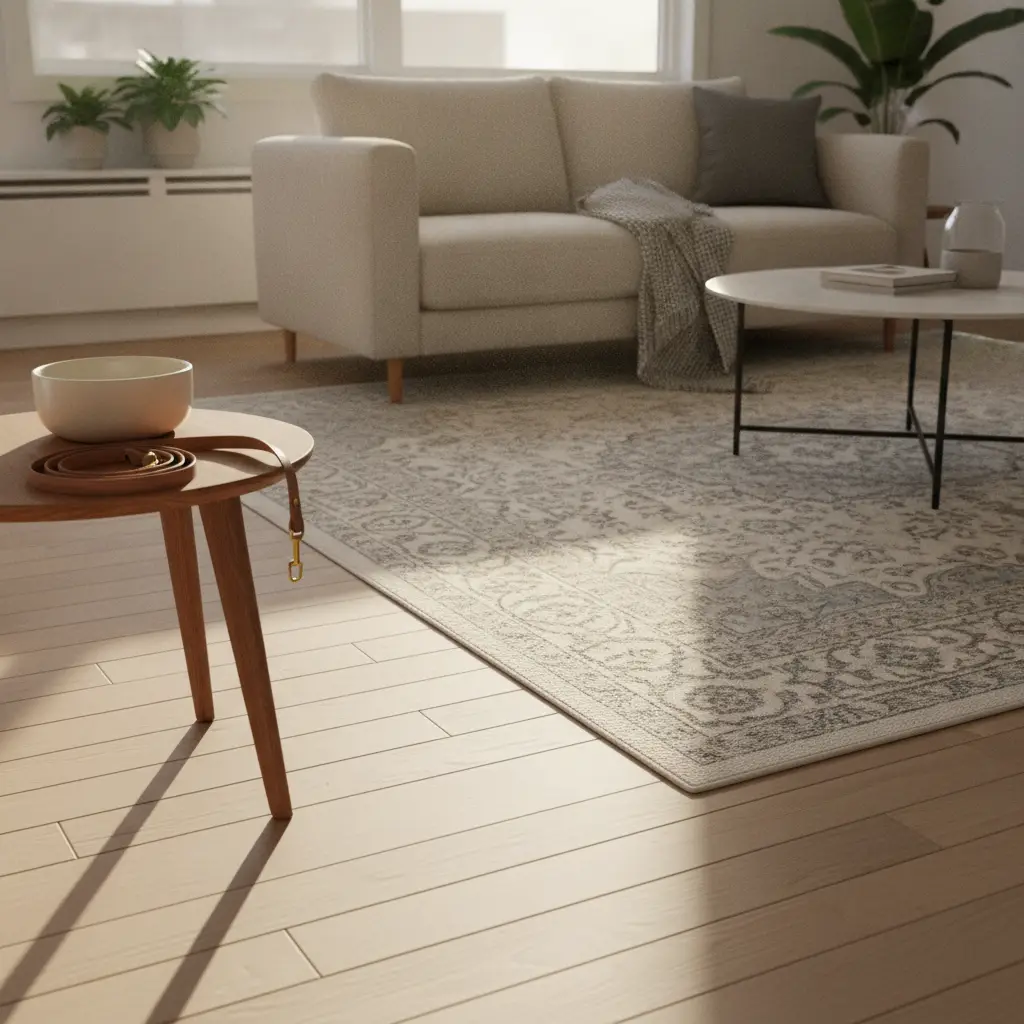
Area rugs are a good way to keep your carpet clean, especially if you have pets that like to come and go and may track in mud and dirt, and patterned rugs are ideal since they forgive the odd smudge of dirt or drift of pet fur—just don’t forget to clean them regularly as you would carpet. Area rugs soak up spills, fur, and smells fast, so instead, lay down machine-washable runners in high-traffic pet zones—they’re easier to clean and cheaper to replace if damaged and they’ll protect your floors underneath too.
Keep Your Pet’s Nails Trimmed and Paws Clean
This sounds simple but it’s huge. Untrimmed nails are one of the fastest ways to scratch and damage hardwood, tile, or even carpet fibers.
Muddy paws compound the problem. Wipe down your pet’s feet before they head inside, especially after rain or walks through dirty areas. It takes 30 seconds and saves your floors a lot of stress.
Clean Accidents Fast and Right
Hidden accidents are a nightmare because urine can soak into the padding and subfloor, creating permanent odor and stains. Finding them early means you can treat them properly before damage spreads.
Protect High-Risk Areas with Barriers and Guards
Some parts of your rental take more pet traffic than others.
Schedule Regular Professional Cleaning
This isn’t just about keeping things looking good. Professional cleaning helps catch stains and odors before they become permanent, which is especially important if you’re trying to protect your deposit when you move out.
Understand Your Lease and Pet Addendum
Having clear documentation of what you’re responsible for also protects you. If damage occurs and you know exactly what the lease says about pet damage liability, you won’t be surprised by deductions from your deposit later.
Know What Your Renters Insurance Covers (and Doesn’t)
However, most renters policies include liability coverage for injuries your pet causes to other people and damage your pet inflicts on someone else’s property, which means if your dog bites a guest or your pet damages a neighbor’s belongings, your renters insurance can help cover medical bills, legal fees, or repair costs up to your policy limits.
If protecting your floors from your own pet is a major concern, it’s worth asking your insurance provider about these optional add-ons.
Take Documentation Photos Before and After
Before your pet moves in—or even better, before you sign the lease—document the condition of your rental with photos. Make note of existing damage, stains, or wear on the floors. This creates a paper trail that protects you later.
Take the same photos when you move out, especially focusing on floors. If your landlord tries to deduct from your deposit claiming pet damage that was actually pre-existing, you’ll have proof that the floors were already in that condition when you arrived.
FAQ
Can I use peel-and-stick vinyl flooring in my rental to protect against pet damage?
Yes, peel-and-stick vinyl tiles or temporary flooring options are renter-friendly because they’re removable and non-damaging. Just make sure to check your lease first—some landlords have rules about temporary flooring. This is a smart, low-commitment way to create a protective layer.
Will my security deposit cover pet damage to floors?
It depends on your lease and local laws. Most leases allow landlords to deduct pet-related damage from deposits, but only for damage beyond normal wear and tear. Document the floor’s condition when you move in, so you have proof if your landlord claims damage you didn’t cause or if it was already there.
What’s the best way to remove pet urine stains from rental carpet?
Use a black light to find all urine spots, then treat them with enzyme-based pet odor products specifically designed to neutralize urine at the source. Don’t just mask the smell with scents—that’s temporary and landlords will notice. If stains have soaked into the padding, professional cleaning is your best bet.
Should I tell my landlord about pet accidents on the floor?
If it’s a serious stain or damage, being honest and addressing it quickly (with professional cleaning if needed) is usually better than hiding it and hoping your landlord doesn’t notice during move-out. Transparency builds trust and shows you’re being responsible.
Can I install wall protectors or floor guards in my rental?
Most pet-proofing solutions use non-damaging options like adhesive guards, pressure gates, or removable mats that protect your space without violating your lease terms. Just make sure anything you install is removable and won’t leave damage when you take it down.