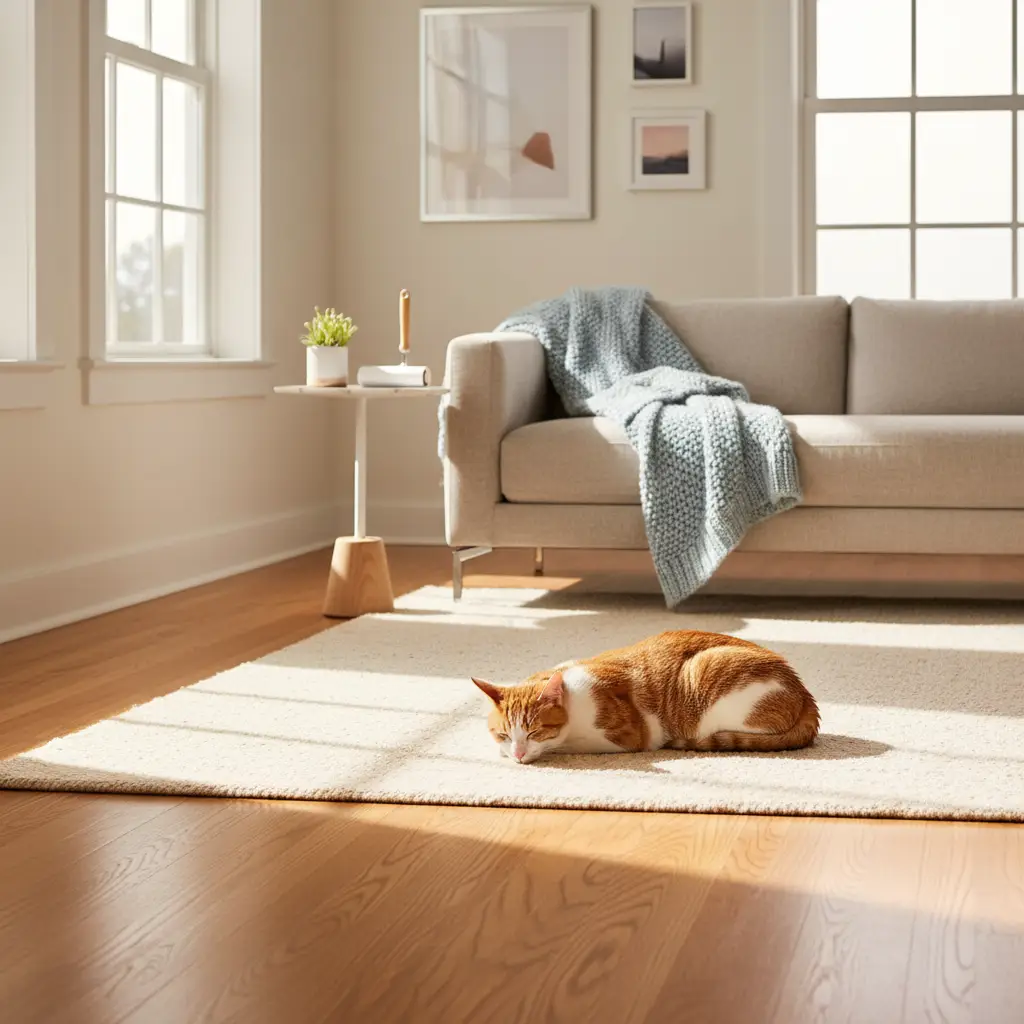

How to Keep Your Apartment Clean with a Cat
Living with a cat in an apartment comes with a lot of joy — and a lot of fur, odors, and unexpected messes. But keeping your space clean doesn’t mean sacrificing the companionship of your feline roommate. Here’s what you actually need to do to keep apartment clean with cat without losing your mind.
Litter Box Management
The Daily Scoop Routine
Scooping once or twice a day is the single most effective habit for odor control, especially in apartments. This is non-negotiable. Seal waste tightly and take the trash out on a set schedule. Think of it like brushing your teeth — just build it into your morning and evening routine.
Once a week, empty the box, wash it thoroughly, let it dry fully, and refresh with clean litter. This weekly deep clean prevents odor from building up in the box itself. If you’re using a plastic box and odors linger even after deep cleaning, it may be time to replace the box entirely, since plastic can become permanently odor-saturated.
Choosing the Right Litter
Look for a clumping cat litter, as it turns urine into solid clumps and coats feces with odor-control litter for easier scooping and reduced cat box smells. Clumping litter makes daily maintenance way easier, especially when you’re scooping twice a day.
Placement and Airflow
Place the litter box in a well-ventilated area, such as near a window or balcony, to help dissipate smells, and use an air purifier or deodorizer nearby to keep the air fresh. In a small apartment, ventilation is your friend. Baking soda can also be sprinkled in the litter to absorb odors naturally.
When Odors Persist
A stale litter smell usually means the litter is saturated or overdue for a full refresh, poop odor tends to be sharp but short-lived and often points to scooping frequency or airflow issues, and cat urine or ammonia smells are stronger, linger longer, and may mean urine is missing the box or soaking into plastic. Understanding the source of the smell helps you fix it faster instead of just masking it with sprays.
Managing Cat Hair
Regular Grooming
Regular brushing is the single most effective way to reduce cat hair in the home, as brushing captures loose fur before it has a chance to float onto your furniture. Even if your cat isn’t into grooming, consistent brushing removes hair before it ends up everywhere.
During peak shedding seasons, daily brushing makes a noticeable difference. Brush your cat a few times a week minimum, more during spring and fall when shedding peaks.
Nutrition Matters
A diet rich in omega-3 and omega-6 fatty acids supports skin health and keeps your cat’s coat strong, which means less loose hair floating around your home, hydration matters too so always keep fresh water available, and a well-nourished cat with a shiny, healthy coat simply sheds less than one eating a diet full of fillers and low-quality protein. You can actually reduce shedding from the inside out.
Cleaning Tools and Techniques
- A vacuum designed for pet hair offers stronger suction and motorized brush heads that dig into carpet fibers, and a powered brush bar maintains effectiveness regardless of how much hair it encounters.
- Toss hairy blankets, throws, and clothing into the dryer for a few minutes on low heat.
- A slightly damp microfiber cloth or dusting mop traps hair on hard floors, shelves, and baseboards instead of pushing it around, as dry sweeping tends to scatter lightweight cat hair into the air.
- Air purifiers with HEPA filters are recommended for homes with cats since they work well in reducing the amount of cat hair and dander floating around.
Furniture Protection
If your cat has a dedicated spot on a cat perch or cat bed, hair concentrates there rather than spreading across all your furniture. Giving your cat designated spaces reduces how much hair spreads throughout your apartment.
Protecting Your Furniture from Scratching
Understanding Why Cats Scratch
Cats have scent glands on their paws – so leaving scratches is how they indicate their presence and territory to other cats, and scratching helps cats shed the outer layers of their nails, which help keep them healthy and sharp. Scratching isn’t destructive misbehavior; it’s a basic feline need.
Redirecting Scratching Behavior
Provide multiple scratching surfaces throughout your home, place scratching posts near furniture or walls that your cat already targets, and use both vertical posts and horizontal pads. Meeting your cat’s scratching needs prevents damage to your actual furniture.
Tall, freestanding towers are the classic renter-friendly option with no installation required and you can take them with you when you move, choose towers that prioritize height over width, and a six-foot tower takes up the same floor space as a small side table but offers multiple levels for climbing, perching, and hiding. Towers are especially good for renters since you don’t have to install anything.
Nail Maintenance
Shorter feline nails are less likely to cause significant damage to your sofa, curtains, or carpets, and it’s recommended you trim your cat’s nails every 2-3 weeks with a vet-approved nail clipper.
Additional Protection Methods
- A furniture cover or slipcover can help protect the surface of your couches or chairs by providing a physical barrier between your cat’s claws and furniture and minimizing any damage they might cause.
- Putting plastic nail caps on cats can help prevent the destruction of furniture as it blunts the nails, and these nail caps come in a range of sizes and last up to six weeks.
- Furniture covers you can easily put on and off and can wash easily are recommended, and another cover to consider are blankets, as cats love the soft texture of blankets and tend not to scratch them.
Reinforcing Good Behavior
Reward your cat with praise, treats, and attention when they show correct scratching behavior, and in this way, both you and your cat can live together harmoniously. Positive reinforcement works way better than punishment.
Weekly and Monthly Cleaning Routines
Dust all your furniture, including hard-to-reach places, as dust and dander can settle in the strangest places and if they build up over time, they can contribute to pet smells, and dusting can disrupt them to places where they can ventilate out of the home or be vacuumed up. Don’t skip dusting — it’s a sneaky place where cat dander hides.
Open your curtains as much as you can to let as much sunlight into your apartment as possible, as the UV rays can assist in removing odor from soiled surfaces. Natural light is a free odor fighter.
Wash pet bedding weekly. Your cat’s favorite spots accumulate the most hair and dander, so keeping those areas clean reduces overall apartment odors.
Preventing Accidents Outside the Litter Box
Cats are naturally clean animals and may avoid using a dirty litter box, leading to accidents around your apartment, and a neglected litter box can become a breeding ground for bacteria and unpleasant odors, which can be particularly problematic in small living spaces. If your cat suddenly starts peeing outside the box, a dirty litter box is often the culprit — but talk to your vet to rule out health issues.
If your cat has accidents, clean the area thoroughly to remove any lingering smells that might attract them back. Use an enzyme-based cleaner to fully eliminate the scent.
FAQs
How often should I scoop the litter box?
In a small apartment, you’ll want to stay on top of scooping the litter box, which will help with overall cleanliness and removing cat urine odor, and it’s best to take care of it twice per day if possible. Once a day is acceptable, but twice a day keeps odors way down.
Can I reduce cat shedding with diet changes?
Yes. A diet rich in omega-3 and omega-6 fatty acids supports skin health and keeps your cat’s coat strong, which means less loose hair floating around your home. Talk to your vet about adjusting your cat’s food if shedding seems excessive.
What’s the best way to protect my couch from scratching?
The best approach combines multiple strategies: provide scratching posts near your couch, trim your cat’s nails regularly, and use removable furniture covers. Since you cannot restrict scratching entirely, what you can do instead is redirect your cat to appropriate scratching surfaces, and in this way, your cat can still act on their instincts and you get to keep your possessions and belongings intact.
Are automatic litter boxes worth it for apartments?
Automatic litter boxes can help if you have the budget, but consistent daily scooping of a regular box is honestly just as effective. Automatic litter boxes like Litter-Robot automatically separate the dirty clumps from the clean litter and store them in a sealed waste drawer, effectively reducing odors, and models also work well for 1-2 cat households and are compact enough to fit under a side table or in a corner.
What should I do if my apartment still smells like cat despite cleaning regularly?
Identify the specific odor source first, then address it. If it feels like your entire apartment smells like “cat”, that’s often a mix of litter dust, hair, humidity, and poor ventilation rather than the litter box alone. Improve ventilation, use an air purifier, and make sure you’re dusting regularly in addition to scooping.