
Best Dog Toys for Indoor Stimulation
Your dog stares at you with those eyes. Again. It’s 3 p.m. on a rainy Tuesday, and they’ve already sighed audibly more times than you can count. Finding the right toys for mental enrichment isn’t just about keeping them quiet (though that’s a nice bonus)—it’s about giving them something their brain actually needs. Discover the best dog toys for indoor stimulation that work for real dogs in real apartments, houses, and shared spaces.
Why Indoor Dogs Need Stimulation
Mental stimulation is very important for dogs and is a necessary part of your dog’s overall health and wellbeing. When dogs don’t get enough mental engagement, especially indoors, they can develop restlessness and unwanted behaviors. Without adequate mental exercise, dogs can become bored, which can lead to various behavioral issues like excessive barking, destructive chewing, and even aggression.
As you consider lack of exercise or stimulation, dogs need plenty of physical as well as mental stimulation, and can become anxious or depressed if they’re inactive or bored. This is especially true when you live in a smaller space or have limited outdoor access. The good news: boredom-related behavioral issues usually improve when a dog’s needs for exercise, social interaction, and mental stimulation are met.
If you’ve noticed your pup pacing, whining, or eyeing your couch cushions like they’re the enemy, you might be wondering why your dog is restless indoors. Dog restless behavior affects a large number of pets and often points to stress, pain, or unmet needs, and can manifest as pacing, excessive barking, or compulsive behaviors. Stimulation toys are one of the most effective ways to address this, giving your dog an outlet for their natural drives and keeping their brain active.
Types of Stimulation Toys
Not all toys are created equal. When looking for the best dog toys for indoor stimulation, you’ll find several categories that serve different purposes:
- Puzzle and problem-solving toys: Puzzle games are probably one of the most common options that dog parents use to provide mental stimulation for dogs. These puzzle toys are wonderful because they are all unique and interactive. Many involve a dog solving the puzzle for a food reward—usually pieces of kibble or treats that you place within the puzzle toy.
- Treat-dispensing toys: If treats or food easily motivate your dog (like many Labrador patients), then the best mental stimulation toy for your dog may be treat dispensing toys. Just like many puzzle games, these toys are designed to dispense a treat or piece of food when the dog plays with it.
- Snuffle mats and foraging toys: Snuffle mats are excellent enrichment toys that tap into your dog’s sense of smell. These mats are made of fabric with various flaps, pockets, or loops where you can hide treats. Your dog will use their nose to search for the hidden goodies, providing mental stimulation and a fun scavenger hunt experience.
- Chew and destructive-play toys: For dogs who like to shake their toys and get them apart, toys with detachable elements are very stimulating.
These redirect that natural urge to tear and explore into something constructive. - Activity and training toys: Training is key for occupational dogs. A play tunnel is a great example for keeping a dog who likes to run engaged.
Best Toys for Indoor Dogs
The toys that work best for your pup depend on their personality and play style. Here’s how to match the toy to your dog:
For the treat-motivated dog:
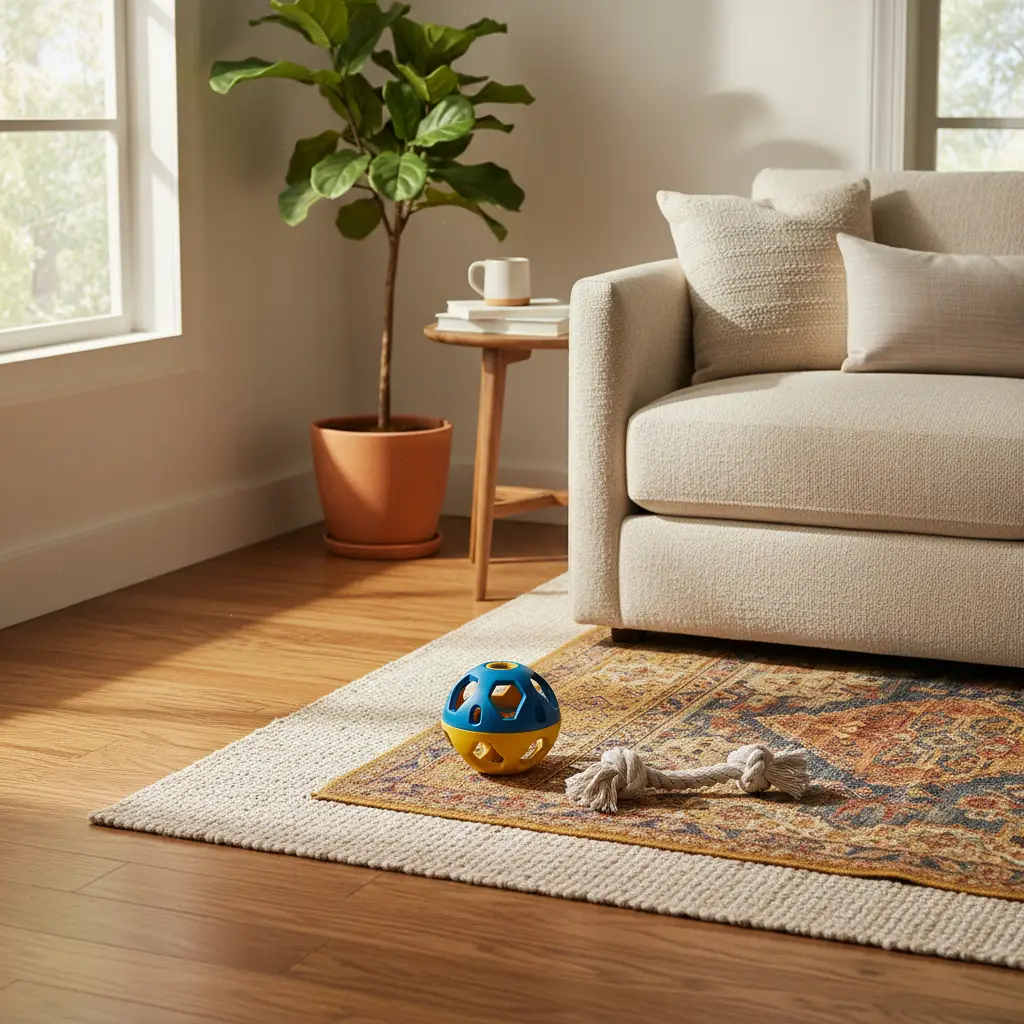
The most common toys that are treat dispensers come in the form of a ball. As your dog pushes the treat ball around, the reward falls out of it. These work especially well for dogs who need a little motivation to stay engaged. You can also try 1800PetMeds, where you can get 20% off using code WELCOME20 at checkout on a wide range of treat dispensing toys and enrichment supplies.
For the problem-solver:
The Nina Ottosson Dog Brick Interactive Puzzle Game is a challenging toy that will keep your dog’s mind sharp. With sliding compartments and removable bone-shaped covers, this puzzle requires your dog to figure out how to access the hidden treats. It’s a great way to provide mental stimulation while encouraging problem-solving skills. These work best if you introduce them gradually and celebrate the small wins.
For the sniffer:
If your dog’s superpower is their nose, a snuffle mat is perfect for rainy days or when you need quiet indoor play. Snuffle mats are pieces of fabric with lots of loops, flaps, or pockets that can be used to hide treats. The point is for your dog to sniff for treats hidden in the fabric. You can even make one at home if you’re feeling crafty—or grab a premade version and save yourself the effort.
For the anxious or energetic dog:
Lightweight, hygienic, and bounce-friendly toys are favorites for redirecting destructive chewers into healthy, satisfying engagement. Interactive toys that require your dog to engage actively—rolling, pouncing, or manipulating them—burn energy while keeping their mind occupied. The combo helps tire them out without leaving your apartment.
How to Use These Toys Effectively
Buying a toy is only half the battle. Here’s how to actually get your dog hooked on stimulation toys:
- Start simple: Start simple, then increase puzzle complexity. Use “win fast” reps to prevent frustration. Let your dog figure out the easy version first, then gradually dial up the difficulty.
- Play with them: The best way to get your dog to play with their interactive toy is to show them how to use it, play right alongside them, and offer regular rewards for success.
- Rotate your toys: Rotate your dog’s toys regularly to keep them engaged and prevent boredom. Introducing new toys and removing old ones will create novelty and excitement, keeping their interest levels high.
- Use scent games: Set up indoor scent games or treat puzzles. Hide treats around the house or yard and encourage your dog to “find it”—a fun way to engage their nose and brain.
By weaving these moments of engagement into your daily routine, you’re doing more than just keeping your dog occupied—you’re supporting their cognitive health, emotional balance, and behavioral development. Small, consistent efforts each day create a strong foundation for a happy, well-adjusted pup.
P.S. This post contains affiliate links at no extra cost to you. The products featured here consistently showed up as top options during our research, and we aim to provide the most accurate and helpful information possible.
FAQ
How often should I rotate my dog’s toys? Rotate your dog’s toys regularly to keep them engaged and prevent boredom. Introducing new toys and removing old ones will create novelty and excitement, keeping their interest levels high. A good rule of thumb is to swap them out weekly or bi-weekly, depending on how quickly your dog loses interest.
Can indoor stimulation toys help with anxiety? Yes. Anxiety often stems from boredom or excess energy. Keeping pets mentally and physically stimulated can help alleviate anxiety symptoms. That said, if your dog’s anxiety is severe or persistent, it’s worth talking to your vet about additional support beyond toys.
What’s the difference between puzzle toys and treat-dispensing toys? Puzzle games are probably one of the most common options that dog parents use to provide mental stimulation for dogs. Many involve a dog solving the puzzle for a food reward. Treat-dispensing toys are simpler—they release treats as your dog plays, without requiring as much problem-solving. Both work well; it depends on your dog’s brain type.
Are expensive puzzle toys worth it? There are tons of fun puzzle toys on the market; however, some can be quite expensive and others are simply too small or too large for a given breed. Do-it-yourself cognitive dog toys not only save you money but allow you to tailor the toy to your dog’s size and preferences. You don’t need to spend a fortune—simple DIY options work just as well.
How do I know if my dog actually needs more stimulation? Watch for signs like excessive barking, destructive chewing, or pacing indoors. Puzzle toys challenge your dog’s brain and help burn nervous energy. If these behaviors improve once you introduce mental enrichment toys, you’ve found your answer.