
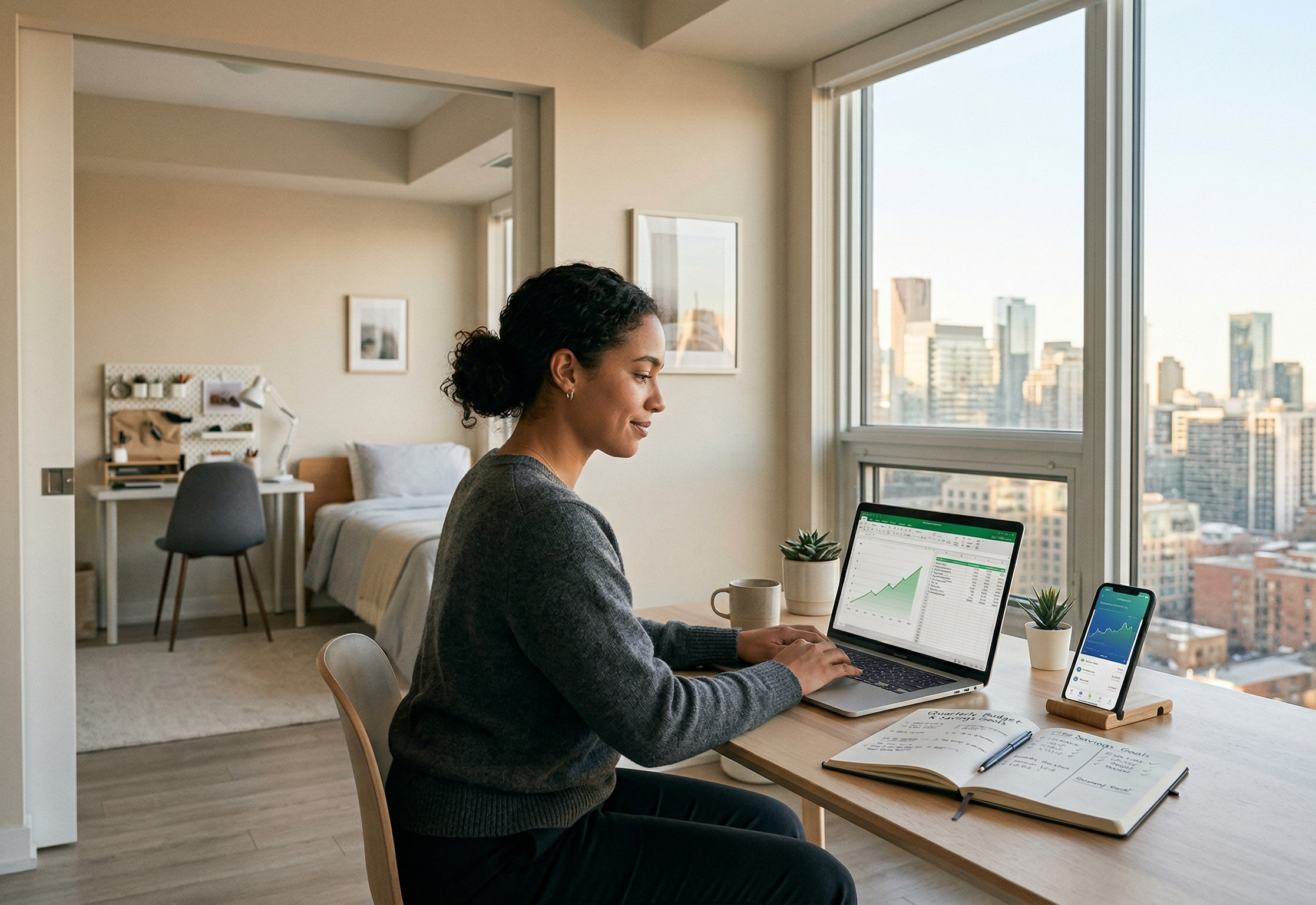

How to build wealth and financial security as a renter
Without the costs and constraints tied to ownership, renters can redirect capital, stay mobile, and take advantage of opportunities that homeowners often cannot. This article explains how renters can build wealth in a structured, practical way, without relying on property ownership as the primary path.
How Renters Can Start Building Wealth Immediately
Renting out a spare room or subletting
If your lease permits it, subletting a portion of your home can offset a significant share of your rent. For example, renting out one room in a two-bedroom apartment turns a fixed cost into a shared expense, freeing up money to save or invest.
In some cases, this can be done through approved or lease-compliant arrangements, which makes the process more straightforward. However, informal setups, while common, can create more risk than benefit. Before moving forward it’s important to review your lease terms, local laws, and any landlord approval requirements.
Monetizing unused space
Unused spaces, such as a parking spot in high-demand areas or a storage space for nearby residents or businesses, can be turned into income with relatively low effort!
While each stream may seem minor, in dense urban areas, small assets can generate consistent monthly income. When combined, they can meaningfully reduce your net housing cost.
Short-term rental opportunities
Short-term rentals can produce higher returns than long-term arrangements, particularly in high-traffic locations. This includes renting out your apartment while traveling or listing a spare room.
At the same time, this strategy requires stricter compliance. Many cities impose limits, licensing requirements, or outright restrictions. Before pursuing this:
- Verify local short-term rental laws
- Confirm landlord approval
- Account for platform fees and vacancy periods
When done properly, short-term rentals can accelerate savings. When done poorly, they can lead to fines or lease termination.
Invest the Money You Don’t Spend on Homeownership
One of the most overlooked advantages of renting is cost control. Homeownership includes expenses beyond the mortgage, such as maintenance, property taxes, insurance, and transaction costs. Renters can redirect these avoided costs into investments.
The “Rent and invest the difference” strategy
Instead of stretching your budget to buy property, you could rent a home that meets your needs and invest the difference between renting and owning. In practice, this works best when:
- Rent is significantly lower than the total cost of ownership
- The savings are consistently invested, not spent
For example: If owning would cost 30% more per month than renting, that extra money can be invested. Over time, those investments can grow and may match or even outperform what you’d gain from owning a home, depending on the market.
The key variable is discipline. Without consistent investing, the advantage disappears.
Beginner-friendly investment options
Before choosing where to invest, it helps to understand your risk tolerance. There’s no single correct approach, but your strategy should match how much risk you’re willing to take.
For more conservative investors, where focus is usually on preserving capital and avoiding large swings in value, options like government bonds or certificates of deposit offer lower returns, but provide more stability. They are also easier to manage for those just getting started.
For those open to a bit more risk, beginner-friendly options like broad market index funds or ETFs that track major markets can offer stronger long-term growth. These investments spread your money across many companies, which helps reduce risk compared to investing in individual stocks.
Renting vs Owning: When It Actually Matters
When renting is financially smarter
Renting often makes more sense when you expect to move within a few years, property prices are high relative to rent, maintenance and transaction costs would be significant, and if you prefer liquidity and flexibility.
For example, in markets where buying costs far exceed renting, ownership may take many years to break even. In these cases, renting and investing the difference can produce stronger financial outcomes.
When buying might make sense
Ownership becomes more attractive when you plan to stay long enough to offset transaction costs, the price to rent ratio favors buying, you want stability in housing costs, and when you have sufficient cash reserves after purchase.
Even then, buying should not eliminate your ability to invest. A property should fit within a broader financial plan, not replace one.
Simple Wealth Plan for Renters
Building wealth as a renter comes down to how you use the flexibility renting provides.
- Start by reducing your housing costs, whether that’s renting out a spare room, subletting when allowed, or monetizing unused space like parking or storage.
- Treat any savings as investment money, not extra spending. The “rent and invest the difference” approach works best when that gap is invested consistently over time.
- Focus on simple, beginner-friendly investments that match your risk level, such as broad market index funds, ETFs, or retirement accounts.
- Flexibility is another advantage. Renting makes it easier to move for better job opportunities or lower living costs, helping you increase your savings rate.
- Revisit your situation periodically. As your income, goals, or location change, reassess whether renting or buying fits your overall financial plan.
Keep in mind that wealth building as a renter is driven by consistency. This means keeping costs low, investing regularly, and adjusting as needed.
FAQ
Can you build wealth without owning property?
Yes. You don’t need to own real estate to build wealth. What matters is consistently putting money into assets that grow over time, like investments or retirement accounts.
Is renting always cheaper than owning?
Not always. It depends on where you live, how long you plan to stay, and the overall cost of buying. In some cases, owning can be cheaper over time, but it often comes with higher upfront and ongoing costs.
How much should renters invest each month?
A good starting point is around 15% to 20% of your income, but it really depends on your situation. The most important thing is to invest regularly, even if the amount starts small.
What is the biggest financial mistake renters make?
Spending the money they save by renting instead of investing it. If that difference isn’t put to work, it doesn’t help build long-term wealth.
Should renters aim to buy eventually?
Only if it fits their goals and lifestyle. Buying a home can make sense for some people, but it’s not the only way to build financial security.