
Renting with a Small Rodent
Moving into a rental with a guinea pig, hamster, gerbil, or other small rodent can feel like an uphill battle. You love your pocket-sized companion like family, but landlords often lump all pets into one broad category—and that’s where things get tricky. If you’re navigating the rental market with a small rodent, here’s what you need to know to find a place where you and your furry friend can both feel at home.
Understanding Landlord Policies on Small Rodents
What “No Pets” Really Means
When a landlord says “no pets,” it doesn’t automatically mean small rodents are excluded. Small caged animals like hamsters, gerbils, mice, and guinea pigs are often treated more leniently and sometimes permitted, but this is not guaranteed—many landlords still ban them. The confusion stems from the fact that most property listings only mention cats and dogs in their pet policy, making it unclear whether caged animals are allowed.
The animals included in a “no pets” policy are at the discretion of the individual landlord. The good news is that most landlords are primarily concerned with animals that are likely to cause property damage and excessive noise.
Why Small Rodents Are Often More Acceptable
Guinea pigs and other small rodents typically cause minimal damage and noise. Because they’re confined to cages, they reduce escape, odor, and property damage concerns. Small animals also present lower allergy, bite, and nuisance risks compared with dogs or cats.
Guinea pigs are an apartment favorite, as they’re quiet, small, and are happy to chew on nibble toys or cardboard instead of walls. This temperament works heavily in your favor during a rental negotiation.
Being Transparent With Your Landlord
Why You Should Always Disclose
You should always mention your guinea pigs to a landlord. Honesty protects you long-term—being caught in a lie can be bad for not only your current situation but future rental situations as well since most landlords ask for references before approving your application.
How to Frame the Conversation
You could say that you have small, caged pets. Mentioning cages tends to put people at ease.
Focus on the fact that your rodent stays contained and won’t roam the apartment unsupervised.
Guinea pigs are more suitable apartment pets than larger animals. Unlike cats and dogs, they don’t take up much space and won’t need free rein of the entire apartment. Additionally, guinea pigs groom themselves regularly and won’t smell bad so long as you clean their cage frequently.
What to Do If Landlords Express Concerns
Educate your potential landlord about your pet. Bring printouts from online resources or photocopies from books to give to your landlord that discuss the housing, feeding, and habits of your pet. Exotic pets are uncommon, and since most people haven’t had the opportunity to learn about the intricacies of living with one, they may have concerns that will be eased simply by learning more about your pet.
Setting Up Proper Housing
Minimum Space Requirements
Your small rodent’s cage setup will be a key discussion point with your landlord. Having a solid plan shows you’re a responsible owner.
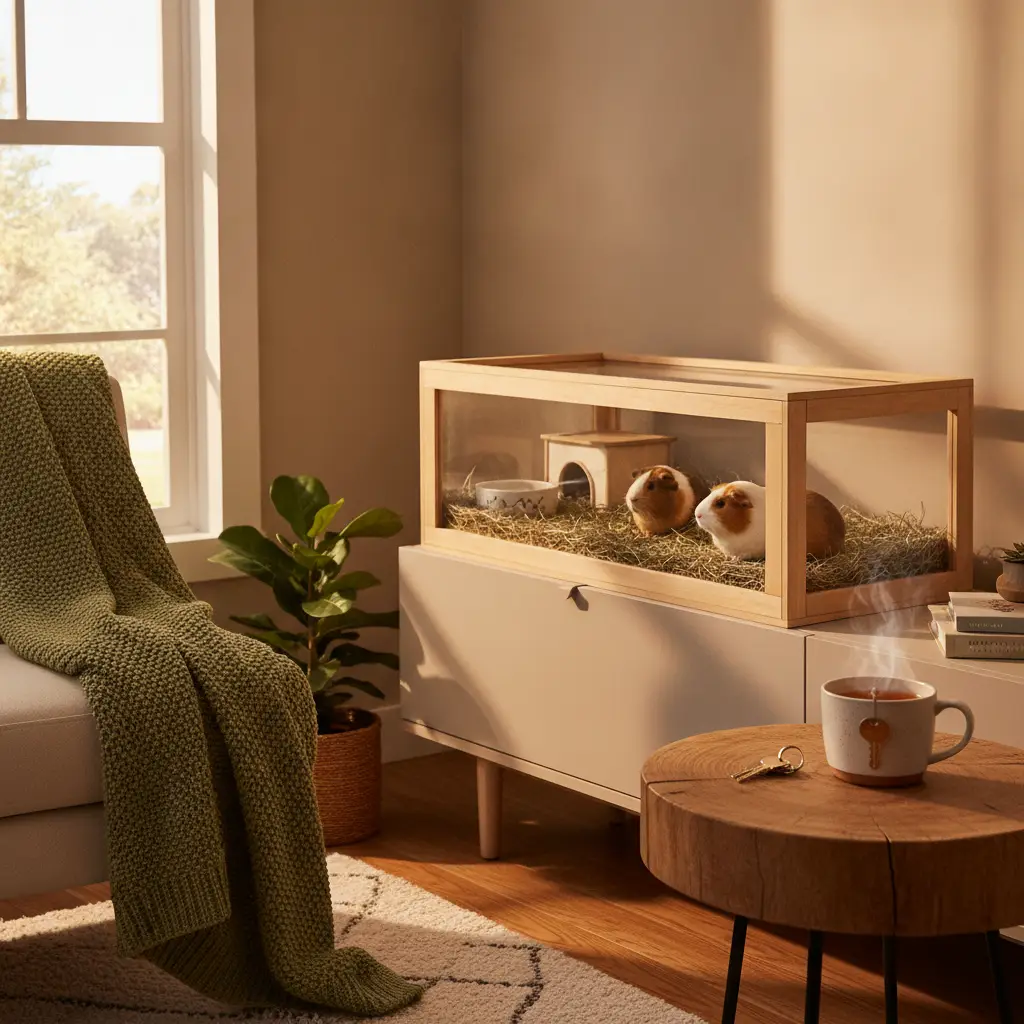
For one guinea pig, 7.5 square feet is the bare minimum, but bigger is better. For two guinea pigs, 7.5 square feet is the minimum, but at least 10.5 square feet is preferred. Many guinea pig rescue organizations recommend C&C cages, which are enclosures made from cubes and coroplast, a corrugated plastic.
The sides of your guinea pig enclosure must be at least 12 inches high and the top may be open, so long as other household pets do not have access to it.
Bedding and Cleanliness
Cedar and pine shavings are not recommended due to chemicals they contain. These aromatic wood shavings can produce fumes that irritate a guinea pig’s respiratory system and feet. Use bedding made from paper and provide 2 to 3 inches of bedding so absorption is maximized.
Regular cleaning prevents odors and shows your landlord you’re committed to keeping the rental in good condition. Do a quick spot check every day and throw out any damp and soiled bedding, replacing it with new.
Space Considerations in Apartments
Guinea pigs can be kept quite happily in a cage in a designated area of an apartment, given that the apartment itself is big enough. Particularly small apartments aren’t as suitable, as guinea pigs do have minimum space requirements that need to be met to keep them happy and healthy.
Guinea pigs also need the occasional floor time where they can run around more freely than they can in their cage. Factor this into your apartment choice and describe this setup to landlords—floor time in a contained, guinea pig-proofed area (like a living room with closed doors) doesn’t pose property risks.
Navigating Pet Fees and Deposits
What to Expect
The decision to charge for guinea pigs is at the discretion of the landlord and the local laws. On average, a pet deposit will cost anywhere between $300–$400. However, a pet deposit fee is not refundable even if no pet damage is caused, although certain state laws require this deposit to be refundable. States such as Hawaii, Montana, and California have made non-refundable pet deposits illegal.
Pet Rent vs. One-Time Deposits
Some landlords will decide that an increased deposit is too much to expect from a tenant and instead will opt to simply increase the monthly rent. This is known as “pet rent.” Pet rent on average will cost between $10–$50 extra per month, but can sometimes be even more.
Getting Clarity Before Signing
When you look at apartment listings online, the pet information usually only mentions cats and dogs. Therefore, to find out if the landlord charges for guinea pigs, you will need to directly contact the estate agency or landlord.
Finding Pet-Friendly Rentals
When you’re searching for a place that welcomes your small rodent, using the right rental platforms makes a huge difference. Here are some options worth exploring:
Dwellsy allows you to create a pet profile that includes species (like guinea pig, hamster, gerbil, or other small rodents), breed, size, and weight. Once you’ve set up your pet profile, you can filter rental listings to show only places that match your pet’s criteria. Listings that allow pets are automatically labeled with a pet-friendly badge, so you can see at a glance which places might work. This eliminates a lot of back-and-forth and keeps you from wasting time on rentals that wouldn’t accept your furry friend.
Apartments.com offers a pet-friendly filter that lets you search by pet type, though its filter focuses mainly on cats and dogs.
PetFBI specializes in pet-friendly housing and lets you filter by various pet types, including small rodents.
Facebook Rental Groups often have landlords and property managers who post pet policies upfront. Joining local housing groups can connect you with individuals who are more flexible about small rodents.
Direct Contact with Landlords still works. Call or email and ask about their specific small animal policy before applying.
Practical Tips for Renting Successfully
Document Your Responsibility
Collect any documentation that would be required of a non-exotic pet and have that available for your new landlord. This demonstrates that you’re a responsible pet owner and that you’re prepared for any issues that might arise.
Be Prepared to Walk Away
Apartment hunting is stressful, and it’s easy to get caught up in a cycle of desperation-fueled capitulations to less than desirable situations. Sometimes you have to take a deep breath, remind yourself that there are other apartments out there, and walk away.
An apartment might seem perfect, but if the landlord cannot or will not accommodate your pets, it is not the perfect apartment for you.
Consider Timing
Long-term, responsible tenants with good payment and inspection records are easier to grant exceptions to.
If you have a stable rental history, highlight it.
Protecting Your Space
Preventing Damage
While unsupervised, guinea pigs should be locked away in cages so they don’t hurt themselves. However, this makes them great apartment pets, as you know they won’t be damaging your apartment while you’re away.
You will need to guinea-pig-proof the floor space to prevent damage to the apartment and prevent losing them. This can be easily done with an indoor run and a waterproof tarp to protect the floor.
Move-Out Readiness
Start your rental relationship thinking about the end. Deep-clean the cage area regularly, address any accidents immediately, and document the apartment’s condition when you move in. This paper trail protects your deposit if any disputes arise down the line.
FAQ
Can I hide my small rodent from my landlord?
No. Landlords conduct inspections, and cages—especially proper-sized ones—are visible. Being dishonest can lead to eviction or loss of references for future rentals. Honesty is always the safer route.
What if my lease says “no rodents” specifically?
Ask your landlord directly to clarify. Some landlords have said they’re totally fine with small rodents since they’re small and caged, even when the lease initially stated “no rodents.” It’s always worth asking before walking away.
Will I definitely have to pay a pet deposit for my small rodent?
Not necessarily. Most apartments do not charge a pet deposit for small, caged animals. However, some do, so confirm with your landlord during the application process. Get it in writing.
How do I convince a landlord who seems unsure?
Emphasize that your rodent stays caged, won’t roam the apartment, produces minimal noise, and causes no damage. Share photos of your setup, mention your previous rental history, and offer references from past landlords. Knowledge is reassuring.
Should I mention my small rodent when first inquiring about an apartment?
Yes. Ask about their pet policy upfront and disclose that you have a small, caged pet. This gives you clarity before investing time in the application process.