
Moving with Pets Cross-Country: A Complete Guide
Packing up your entire life and moving it across the country is stressful enough without worrying about your pet’s wellbeing during the process. But the good news is that with proper planning, moving with pets cross country can actually go smoothly—and even become a bonding experience for you and your furry family member. So what do you actually need to do to make sure your pet gets to their new home safely and comfortably?
Start Your Preparation Early
This might seem like a lot of advance notice, but it genuinely makes a difference. You need time to get your pet ready mentally and physically, gather necessary documents, and arrange any services you might need along the way.
Ideally, you should begin preparing for your pet’s move at least a month in advance. This gives you ample time to gather necessary documents, make travel arrangements, and help your pet adjust to any changes.
Schedule a Veterinary Checkup
Before anything else, book an appointment with your current vet. Ask your vet for copies of your pet’s medical records and vaccination history. This is also the time to ask about state-specific requirements.
Pick up all the records and medications you need, including heartworm prevention, NSAIDs, anti-anxiety medications, etc., to last until you find a vet in your new home.
When you travel with a pet, your destination State or Territory may have animal health requirements, such as obtaining a health certificate, updating vaccinations, diagnostic testing, or administering treatments.
Update ID and Microchip Information
If your pet gets lost during the chaos of moving, current identification is critical.
As you travel, be sure your pet always has a collar on. Fit it with an ID tag clearly stating your name and cellphone number.
Choose Your Transportation Method
The way you move your pet is one of the biggest decisions you’ll make.
You generally have three main choices for moving cross-country with animals: driving, flying, or hiring specialized professionals. Each transit method requires different preparations and carries distinct advantages.
Driving
Driving your car or renting a vehicle means you can stop whenever you want, whether it’s to take a potty break, stretch their legs, or detour to a dog-friendly park or trail. Plus, a road trip will keep you calm when you don’t have to worry about them being alone in a crate for extended periods.
If traveling by car, take your pet on short practice drives to acclimate them. Plan for rest stops every few hours, especially for dogs, and never leave pets unattended in a parked car.
Flying
Airline policies regarding pet travel vary, so check with your airline in advance.
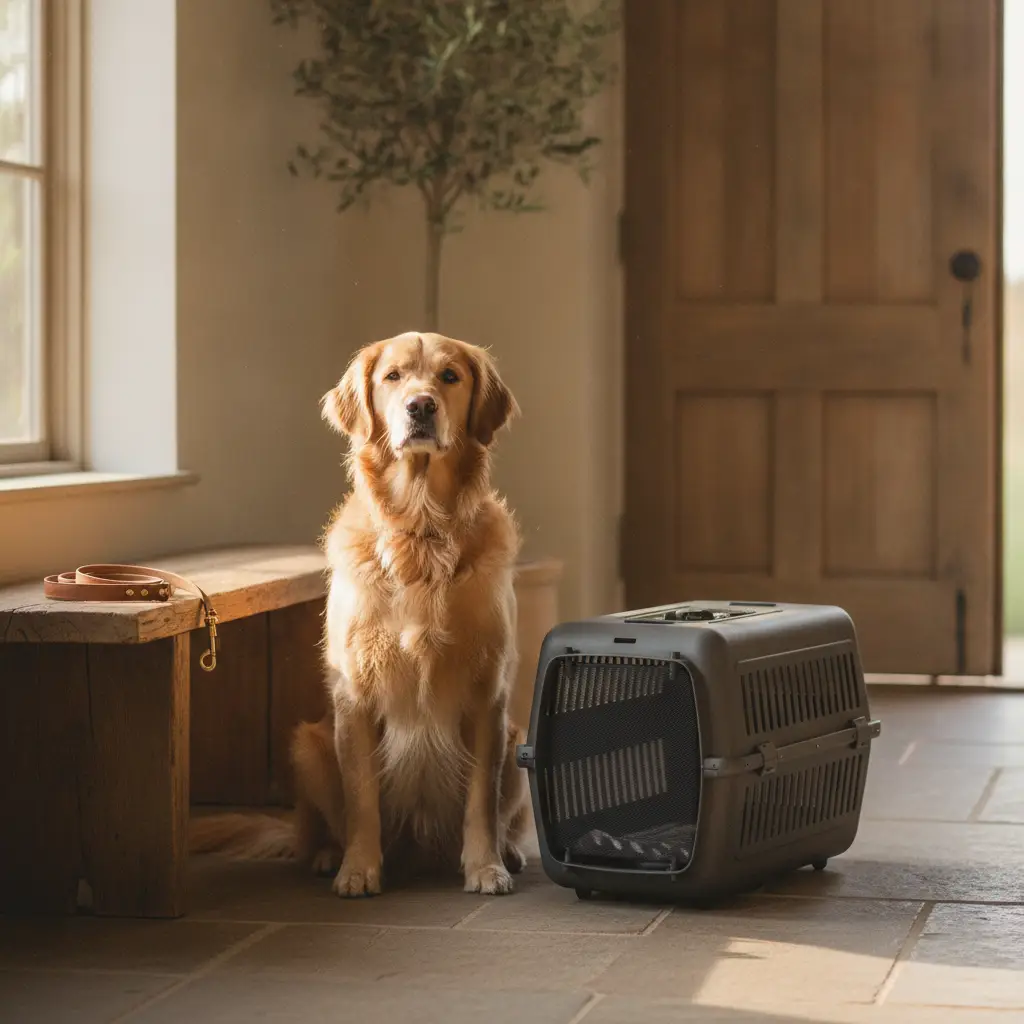
Make sure your pet is familiar with their carrier at least a month before flying so they associate their crate with a safe environment.
While it might be tempting, avoid giving your pet sedatives or tranquilizers, as they increase the chances of respiratory and cardiovascular problems at high altitudes.
Professional Pet Transport Services
Professional pet transport services offer a special, door-to-door solution made to lower stress for both you and your furry, feathered, or scaled family members. These companies use climate-controlled, custom-equipped vehicles and have trained animal handlers who make safety and comfort a priority throughout the trip.
They are especially helpful for those who can’t drive their pets themselves due to work, distance, or the specific needs of their animal.
Prepare a Travel Carrier and Crate
Your pet’s carrier is crucial for their safety.
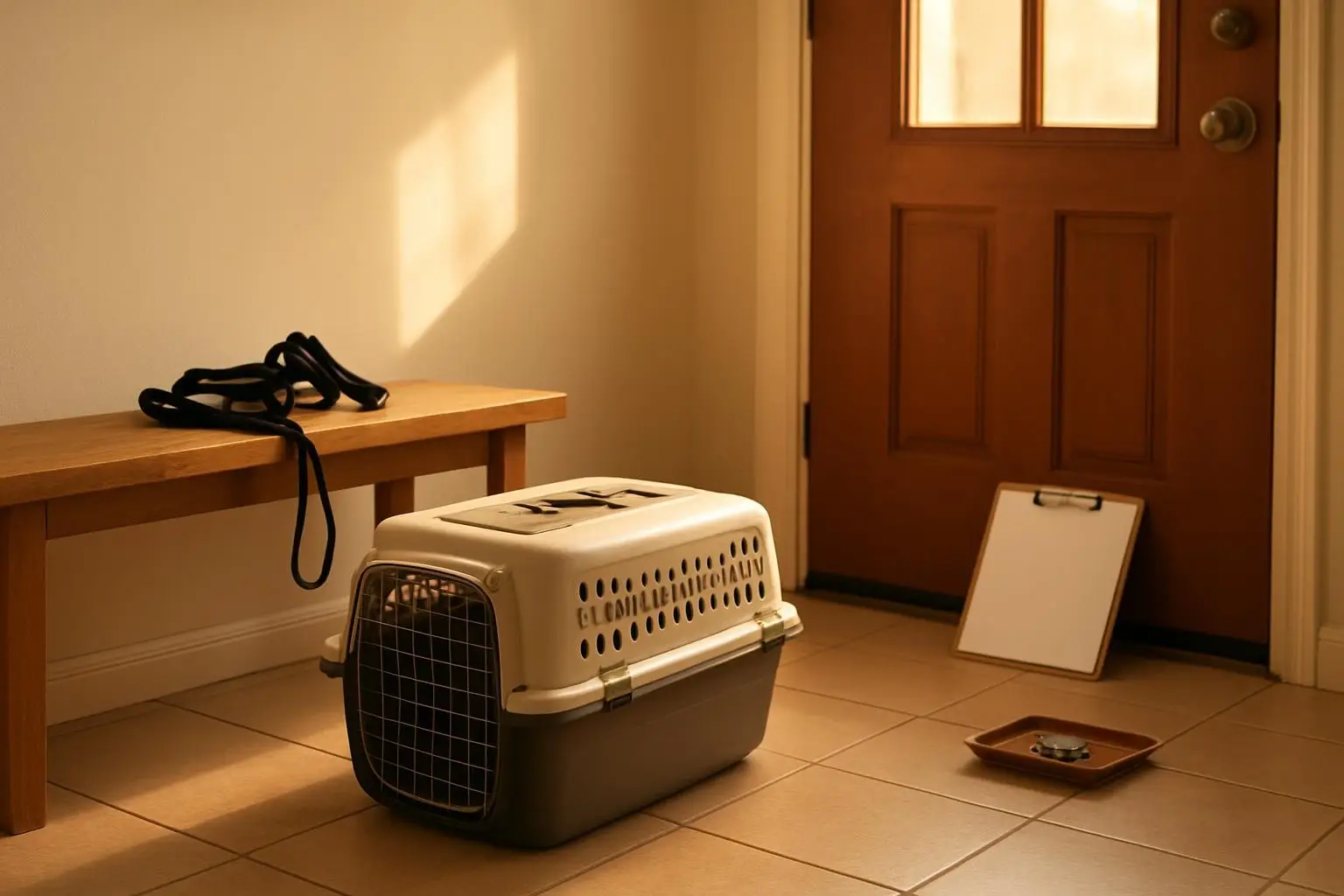
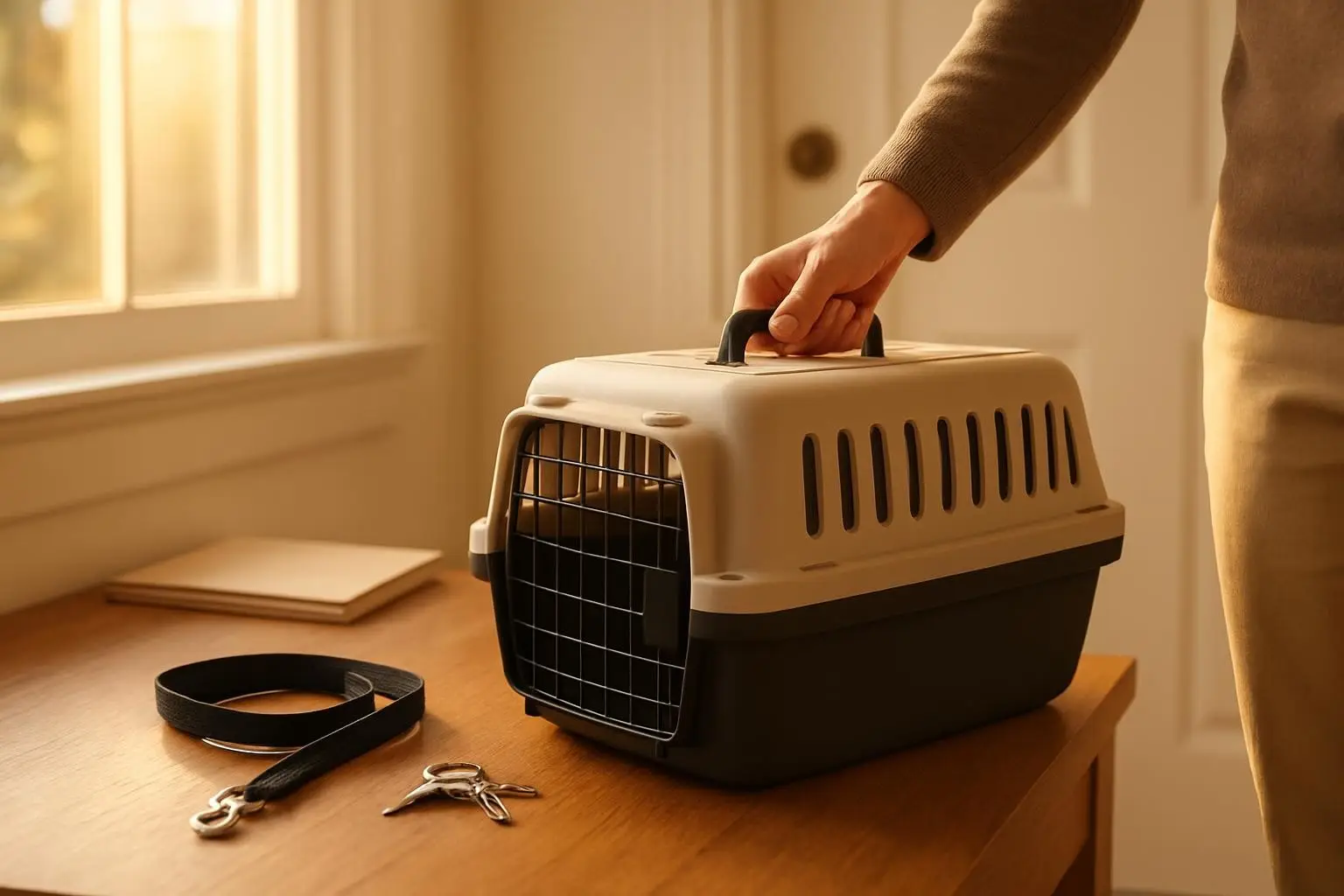
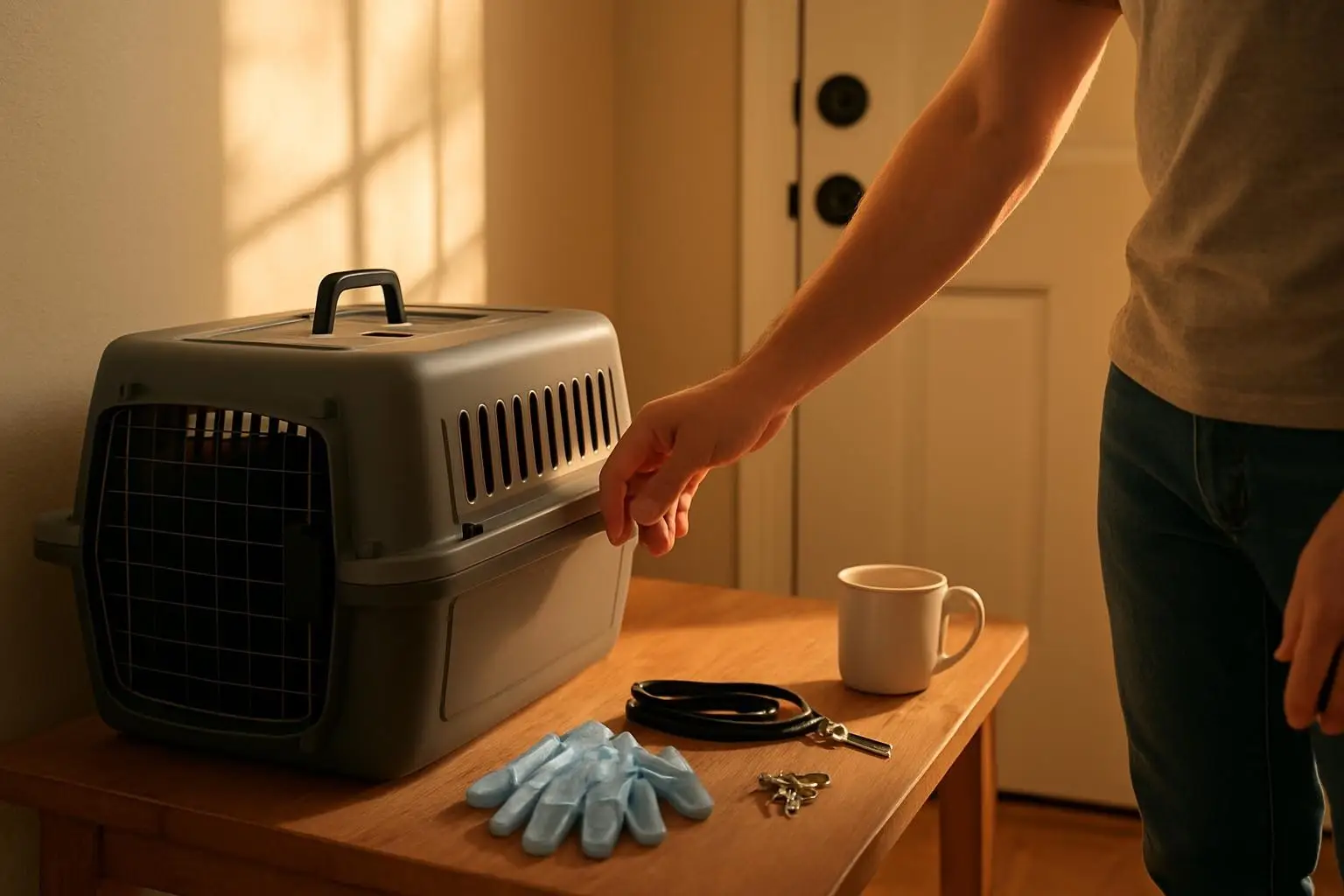
The travel crate should match your pet’s size and the transport method. Your pet should be able to stand, turn around, sit, and lie down naturally. The crate should also have secure locks, strong walls, good airflow, and a stable base.
Introduce pets to their travel carrier well in advance of moving day. Use treats and familiar bedding to make it feel comfortable and familiar.
Gather Essential Items for the Journey
Pack a travel bag with everything your pet might need during the move.
Have a bag of essentials ready for your pet. All the necessary items like food, bowls, treats, medications, leash, litter box for cats, waste bags for dogs, etc., should be included.
Keep this bag accessible during the drive or at your hotel stops.
Your pets should fast a few hours before the trip. Cats, in particular, are known to have a delicate stomach and are susceptible to vomiting.
Plan your pet’s meals accordingly and maintain a schedule while you’re on the road. Additionally, avoid giving them new food before your journey as this could make stomach issues worse.
Plan Your Route and Book Pet-Friendly Lodging
Be sure the accommodations you consider are pet-friendly and accept your pet. Some locations offer pet guests to stay for free, while others have a small fee.
Map out where you’ll stop if the move takes more than one day, and research pet policies in advance.
Manage Moving Day
Let your mover know you have pets. When moving day arrives, your pet should be looked after or kept away from the activity for their safety, and the safety of the move crew. If you don’t have someone to watch them, use crates to contain your pets safely in a specific area of the house.
The moving day itself is chaotic. Keep your pets as calm as possible during the packing and loading process by creating a safe spot away from the chaos and hazards. Just like predictability helps humans relax, the same is true with animals, so try to keep your pets’ daily routine going, including walks and feedings. This ensures they’ll still be familiar with their surroundings and less likely to participate in unsafe behaviors.
Settling In at Your New Home
When you arrive at your new place, resist the urge to let your pet explore the entire house at once.
Set up a safe, quiet space for your pet as soon as you arrive in your new home.
When you arrive, set up a quiet space filled with familiar items like their bed and toys. After the movers leave, introduce them to the rest of the house one room at a time.
Get Established Locally
Start building your pet’s new support network right away.
Your current vet may be able to help you choose one in your new area, or you can research what places are available and keep their information in a safe place.
Don’t delay finding a trusted local veterinarian—you want to know who to call if your pet gets sick or injured.
Getting back to your regular daily schedule is the most effective way to help pets feel secure and comfortable in their new home. Keep feedings, walks, and bedtime at the same time.
Consistency helps your pet adjust faster than anything else.
Watch for Signs of Stress
Moving is a stressful experience for pets. Don’t assume they’re okay — keep a close eye out for signs of anxiety in the days and weeks after the move.
After the move, keep an eye on your pet’s behavior. Some pets may take longer to adjust than others.
If your pet isn’t eating, seems withdrawn, or is acting out, talk to your new vet about what might help.
FAQ
What documents do I need to move my pet across the country?
You may need a health certificate, rabies record, vaccine proof, or other travel papers. Some destinations may ask for extra forms, so owners should confirm the rules early.
Keeping both digital and printed copies is a smart backup plan.
Is it better to drive or fly with my pet cross-country?
The safest option depends on your pet’s temperament, your timeline, and the distance. Car travel is usually less stressful on pets because it allows Freckles and Champ to be close to you, so you can monitor their well-being and come to their aid if needed. Professional pet transport is a strong option if you can’t travel with your pet yourself.
How long does it take for a pet to adjust to a new home after a cross-country move?
Every pet is different. Some settle in after a few days; others take weeks. Keeping your pet’s routine as consistent as possible—same feeding times, same walking schedule, same bedtime—helps speed up the adjustment process. Your pet’s stress is largely tied to predictability.
Should I give my pet medication to help them relax during the move?
Your veterinarian can recommend calming strategies if your pet is anxious. They may also suggest medications or supplements if needed.
Talk to your vet about what’s appropriate for your specific pet—sedatives aren’t always the right choice.
What should I do if my pet gets lost during the move?
This is why microchipping and updated ID tags are so important. This helps ensure your pet can be identified if separated during travel. Consider adding temporary tags with your new address as well.
Keep a recent photo of your pet handy and know the location of shelters and rescue organizations in your new area.