
How to Exercise a Dog in a Small Apartment
Living in a small apartment with a dog doesn’t mean they’re stuck being bored or restless all day. You can actually keep your dog healthier and happier through intentional exercise and play right in your limited space. The good news? Dogs are surprisingly adaptable and don’t need acres of space — they need engagement. So how do you provide that engagement when square footage is tight?
Daily Structured Walks
Daily walks are the foundation, and two to three walks per day, with at least one being a longer outing of 30 to 45 minutes, meets the exercise needs of most adult dogs. The key isn’t just moving your dog around the block — it’s making walks count. Let your dog sniff during walks, as sniffing is mental exercise, and a 20-minute sniff walk can be as tiring as a 40-minute brisk walk. Vary your routes so your dog encounters new smells and environments regularly.
When you’re renting and searching for a pet-friendly apartment, finding a place with good walkability nearby is worth the effort. If you’re still hunting for the right apartment, here are some pet-friendly rental search options:
- Dwellsy: Allows you to create a pet profile (including species, breed, size, and weight) and filters rental listings to show only those that match your pet’s criteria. Listings marked as pet-friendly get a special badge, so you know upfront which places accept dogs.
- Apartments.com: Offers a pet filter to search listings that allow dogs, though you may need to contact landlords for specific details.
- Zillow: Provides pet-friendly rental filters and shows pet policies for each listing.
- PetFBI: A dedicated pet-friendly rental database where landlords list policies upfront.
- Craigslist: Search by location and contact landlords directly to discuss pet policies.
Indoor Fetch
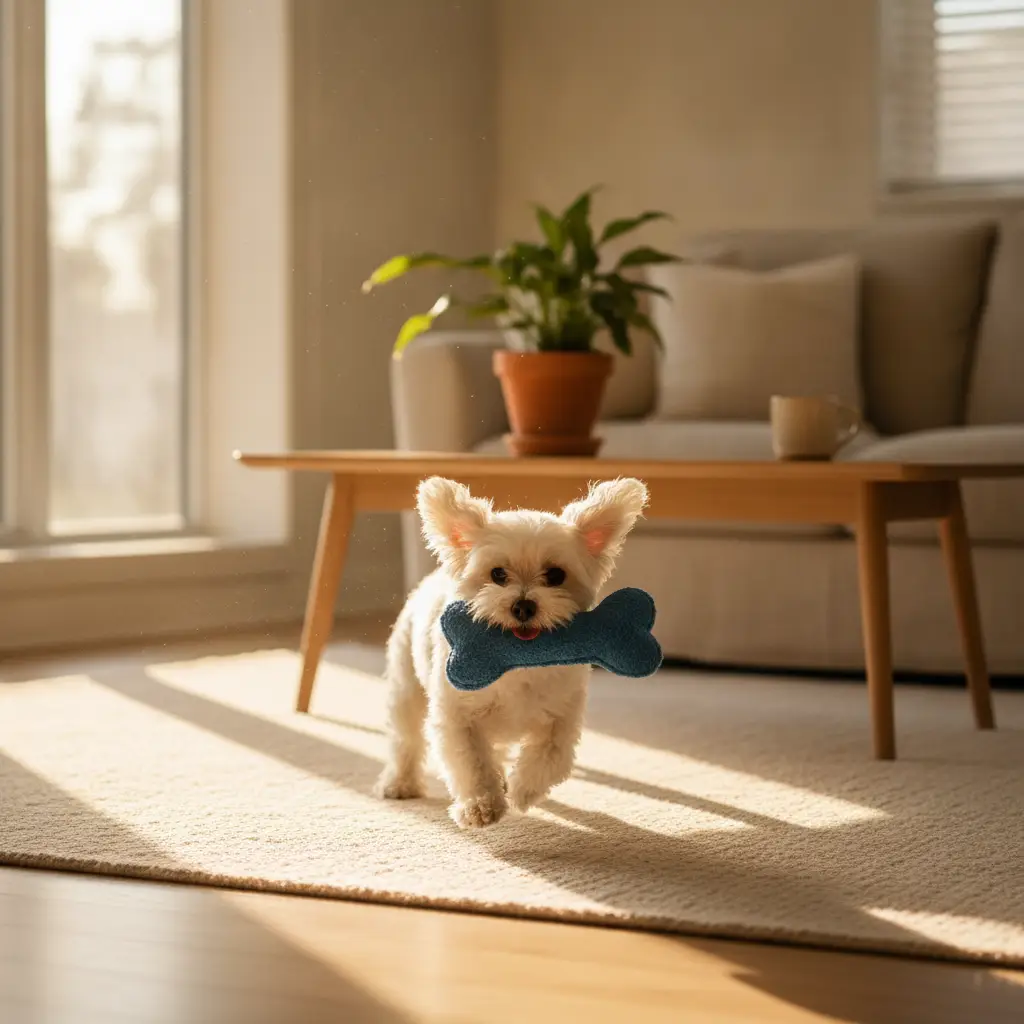
Your apartment hallway is a perfectly underrated fetch lane; use a lightweight ball or soft toy to keep noise down and avoid scuffing floors, and keep sessions to 5–10 minutes so your dog stays energized and engaged. You don’t necessarily need a lot of space to play fetch — you can use your hallway, great room, or stairwell (if you live in a two-story apartment) as your “Fetching Ground.”
Tug-of-War
Tug is one of the most effective full-body workouts for dogs, engaging muscles, burning energy, and strengthening your bond. Contrary to old training myths, tug-of-war does not make dogs aggressive when played with rules: you initiate, you end it, your dog drops on command. This game is especially useful because it requires minimal space and works your dog’s entire body.
Nose Work and Hide-and-Seek Games
Hide small treats or kibble around your apartment — under cushions, behind doors, in corners — and let your dog sniff them out, which activates their nose (exhausting them mentally) and satisfies their natural foraging instinct, then start easy and increase difficulty as they get better at it. Mental exercise exhausts dogs faster than physical exercise alone.
You can also play hide-and-seek the classic way. Set up a “home base” for your dog, ask them to stay, then hide somewhere in your apartment where they can hear you. Call your dog and reward them with treats and praise when they find you. Dogs love the challenge of finding their owners or favorite toys; start with easy hiding spots and gradually increase the difficulty, use treats or praise as a reward when they find you, and this game not only provides mental exercise but also strengthens your bond.
Puzzle Toys and Enrichment Feeders
Replacing your dog’s regular bowl with a puzzle feeder makes every meal a workout for their brain, and you can pair it with a frozen lick mat for extended engagement. Enrichment toys, such as puzzle games, provide excellent mental stimulation for your dog, and you might be surprised to find that 15 minutes of solving a puzzle can tire your dog just as much as a 45-minute walk.
Scatter feeding, where you sprinkle your dog’s kibble across the floor or on a snuffle mat, turns mealtime into a foraging exercise, and puzzle toys and lick mats provide mental stimulation that reduces restlessness. It’s a simple way to make meal time do double duty.
Stair Climbing
If your apartment building or home has stairs, you have a built-in workout station. If your building has stairs, congratulations — you have a built-in gym, as walking up and down stairs works your dog’s hindquarters intensely, burns significant calories, and builds muscle, with even 3–5 minutes of stair work counting. Just be mindful that stair work isn’t ideal for puppies, senior dogs, or breeds prone to back issues.
Training Sessions
Use indoor time to polish basic commands or teach new tricks like roll over, spin, or high-five, and training for 10–15 minutes a day can tire your dog out just as much as a walk. Short training sessions throughout the day, even five minutes of practicing cues, burn mental energy and reinforce your relationship. Training also gives your dog a “job” to do, which many dogs thrive on.
Dog Parks and Outdoor Socialization
While indoor exercise is critical, getting outside to a dog park or other social spaces matters too. Whenever possible, visit a nearby dog park for off-leash play, which gives your dog the freedom to run and interact with other dogs in a safe, enclosed space. Going for a walk with a dog is more than just an opportunity to burn off some energy and get physical exercise, as they also receive plenty of mental stimulation from the sights, sounds, and smells they come across, and there’s the opportunity to meet other people and dogs giving them social enrichment.
If you find a dog with compatible energy levels, playdates can be game-changing. Invite a neighbor’s dog for an indoor playdate in your living room or a communal space, as dog-to-dog play is intensely physical and social, and even 20 minutes of rough-and-tumble play with a compatible dog can equal an hour of solo exercise.
Understanding How Much Exercise Your Dog Actually Needs
Most apartment dogs need 30–60 minutes of active exercise per day, split into 2–3 sessions, high-energy breeds may need 90 minutes, and mental enrichment activities like puzzle feeders count toward their daily needs. The key is mixing physical exercise with mental stimulation — they work together to tire your dog out properly.
A well-exercised apartment dog is calmer, sleeps better, and causes fewer problems than a bored dog with access to a backyard. That boredom often shows up as excessive barking, destructive chewing, or other unwanted behaviors. Regular, intentional exercise prevents that.
Making It Sustainable for You
The real challenge isn’t finding ways to exercise your dog — it’s making it a habit. Exercising your dog in an apartment setting may present unique challenges, but it also offers opportunities for creativity and bonding, and by incorporating a variety of indoor activities, interactive toys, and establishing a consistent routine, you can provide your furry companion with the physical and mental stimulation they need to thrive.
Start with what feels doable for your schedule. If you can only commit to two walks and one training session daily, that’s a solid foundation. Add indoor enrichment throughout the day — a puzzle feeder at breakfast, a quick hide-and-seek game at lunch, a tug session in the evening. Build from there. The point is consistency, not perfection.
FAQ
Can dogs be happy living in apartments?
Dogs can live happily and healthily in apartments as long as they receive regular exercise, mental stimulation, and a consistent routine, and daily walks, enrichment toys, and social interaction help apartment dogs stay active and emotionally balanced.
What’s the difference between physical and mental exercise for dogs?
Physical exercise (like walks and fetch) burns energy and keeps your dog’s body fit. Mental exercise (like puzzle toys, training, and nose work) engages their brain and is equally important. Mental exercise exhausts dogs faster than physical exercise alone. The best routines combine both.
My dog seems bored indoors. What are the signs?
If your dog is destroying furniture, pacing, barking excessively, or behaving erratically, they may be under-exercised. Restlessness and destructive behavior are usually your dog’s way of telling you they need more engagement.
Do I need special equipment to exercise my dog indoors?
No. Soft balls for fetch, rope toys for tug-of-war, and household items like empty boxes or towels for puzzle games all work. Puzzle feeders and snuffle mats are affordable and worth it, but you can start with what you already have at home.
Can I rely only on indoor exercise, or does my dog need to go outside?
Your dog’s exercise routine shouldn’t wholly replace the health benefits of going outdoors, as daily exercise that includes walks or visits to a dog park allows your pet to socialize with other dogs and experience new sights and smells. Indoor exercise is essential, but outdoor walks and park time are still important for your dog’s overall well-being.