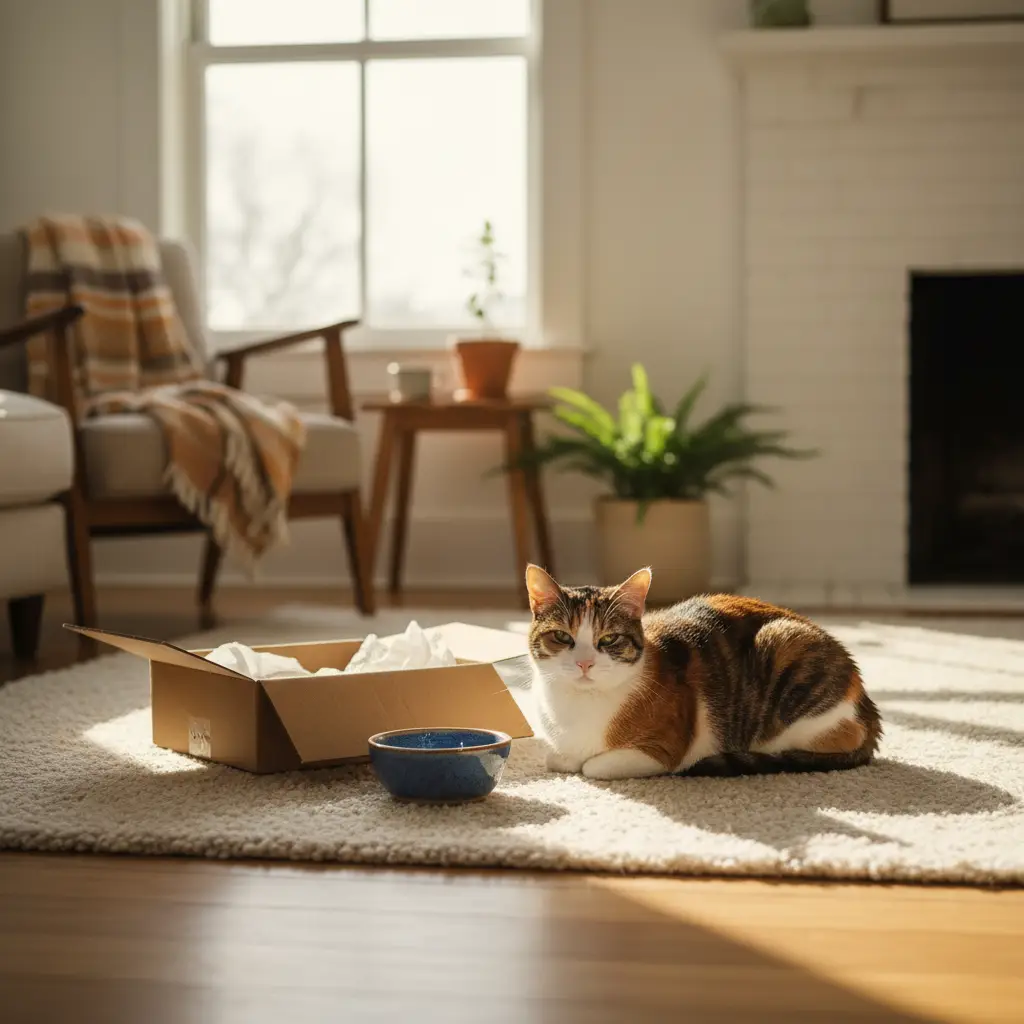

Moving Day Anxiety
Your cat doesn’t understand that your new place is actually an upgrade. To them, you’ve just relocated their entire world without permission. Moving is legitimately disorienting for cats—they’re territorial creatures who navigate life through familiar scents, sounds, and routines, and suddenly all of that is gone. Understanding why cat stress new home situations happen is the first step to helping your cat actually settle in instead of spending weeks hiding under the bed.
Why Cats React to New Environments
Cats are territorial and rely on familiar sights, smells, and routines for a sense of normalcy and predictability each day. Moving disrupts their familiar environment and sensory cues, leaving them feeling stressed. Every corner of your old place was marked with their scent and memory. A new home erases all of that.
The stress isn’t a behavior problem—it’s a real physiological response. Stress in cats can weaken their immune system, trigger digestive issues, and even contribute to conditions like feline urinary tract infections. The good news: cats are adaptable. Most cats require 2-4 weeks to show significant signs of adjustment, though individual timelines vary considerably based on personality, previous experiences, and the specific circumstances of the move. Older cats or those with a history of anxiety may take longer, but patience and consistency go a long way.
Signs of Stress
Your cat might not meow dramatically about their feelings, but they’ll show you something’s off. Watch for these common indicators:
- A stressed cat may seek solitude in a dark, quiet place, away from other pets and people. If your cat disappears more frequently than usual, they may be feeling stressed.
- Anxious cats may lose interest in food or eat more than usual, depending on the reason for their stress. A sudden appetite change is always concerning in a cat, whether it is linked to a physical or mental health issue.
- Stress can trigger excessive and compulsive grooming in cats, sometimes causing bald spots or skin irritation on the belly or legs.
- Watch for behavior such as eliminating outside the litter box, restlessness or lethargy.
- When cats are experiencing stress, they tend to be more vocal.
The tricky part? The domestic cat can be great at hiding signs of stress or signs that they’re in pain, it’s in their nature. Pay attention to even subtle shifts in behavior. One day your cat seems fine, and the next you notice something’s changed.
How to Help Your Cat Adjust
Successful adjustment comes down to slow, predictable changes paired with familiar comfort items.
Start with a safe room. The ‘home base’ is a small, confined area in the new home in which your cat will initially stay. Pick a bedroom, bathroom, or office—somewhere quiet and away from moving chaos. Set up their essentials in this room: litter box, water, food, favorite toys, and bedding. Create a "comfort kit" containing your cat’s favorite blanket, toys, scratching post, and any items that carry familiar scents. Avoid washing these items before the move. The familiar smells provide crucial psychological comfort during the transition.
Expand their space gradually. Having full access to the new house right away will overwhelm and stress your cat out. From your cat’s home base, gradually increase access as your cat shows less stress and anxiety. This isn’t about rushing. Let your cat explore one room at a time as they feel confident.
Maintain consistent routines. Keep your cat’s routine (mealtime, play time, etc.) as consistent as possible, so your cat can feel a sense of normalcy while they adjust to their new surroundings. Feed them at the same times, play with them at the same times. Predictability is comforting.
Use pheromone diffusers. Plug-in pheromone diffusers will provide a familiar scent for your cat, helping them feel more settled. Calming aids, such as cat treats containing ingredients that reduce stress and anxiety (e.g., l-theanine, thiamine), are also helpful. Synthetic pheromone products like Feliway diffusers can provide valuable support by mimicking natural cat pheromones that signal safety and comfort. Start using pheromone diffusers 2-3 days before your cat’s arrival and continue for 4-6 weeks.
Spend quality time together. Close, quiet time with your cat in their home base can help them feel calmer. You don’t need to force interaction—just be present in the room, let them come to you, and offer reassurance through your calm energy.
Best Supplements to Calm Down Your Cat
If your cat’s stress feels severe, supplements can help support their nervous system while they adjust. Here are some commonly recommended options:
L-Theanine. L-theanine is an amino acid naturally found in green tea that promotes relaxation without causing drowsiness. Studies show it increases alpha brain waves associated with calm alertness, making it perfect for anxious cats who still need to function. Many cat owners report seeing results within 30 minutes to an hour of administration.
L-Tryptophan. L-tryptophan is an essential amino acid your cat’s body cannot produce on its own, making supplementation valuable for anxious felines. This ingredient is a precursor to serotonin, the neurotransmitter that regulates mood and promotes feelings of well-being. When cats consume adequate L-tryptophan, their bodies convert it into serotonin, naturally improving mood and reducing anxiety-driven behaviors.
Pheromone products. Feline pheromones are naturally occurring chemicals cats produce to mark safe territory and communicate calm to other cats. Synthetic versions of these pheromones can be incredibly effective at reducing stress-related behaviors.
Herbal blends. Some supplements combine calming herbs for added effect. Always talk to your veterinarian before introducing a new supplement to your cat.
Where to Buy Supplements for Your Cat
Finding quality supplements is easier than ever. Here are some reliable places to shop:
- Treats contain natural ingredients, like L-theanine and thiamine, that reduce stress and anxiety, help your cat feel calm, and improve its mood. Among the companies that sell calming treats are Vetriscience, Pet Naturals, Pet Honest, Zesty Paws and Cat MX.
- 1800PetMeds offers a wide range of calming supplements and medications; you can get 20% off using code WELCOME20 at checkout.
- Zesty Paws specializes in pet supplements, including popular calming formulas, with free shipping on orders $60 or more.
- Professional Supplement Center carries both human and pet supplements with free shipping on vitamins and supplements.
- BudgetPetWorld offers budget-friendly options with 12% off sitewide and free shipping, plus extra savings on auto-order.
Talk to your vet about which option makes sense for your cat’s specific needs—they can recommend brands they trust and dosages based on your cat’s age and weight.
P.S. This post contains affiliate links at no extra cost to you. The products featured here consistently showed up as top options during our research, and we aim to provide the most accurate and helpful information possible.
FAQ
How long does it take for a cat to fully adjust to a new home?
By three months, most cats start feeling truly secure. They’ll bond more with you and settle into their new normal. However, some cats may feel at ease in a couple of weeks, while others need several weeks. The key is patience and consistency during those first few weeks.
Should I let my cat explore the new house right away?
No. Start them in one safe room and gradually open up access to other areas of the house as they become more confident. Giving them the full house immediately will overwhelm them and extend the adjustment period.
What should I do if my cat stops eating after moving?
Loss of appetite can be stress-related, but it can also signal a medical issue. If your cat is showing signs of a low appetite, low water intake, diarrhea, or vomiting, schedule a veterinary visit. A vet can rule out any health concerns and help you address the stress.
Are supplements safe for cats?
Most calming supplements designed for cats are safe when used as directed, but it’s important to consult your vet first. They can recommend products that won’t interact with any existing medications and suggest appropriate dosages for your cat’s age and size.
What if my cat is still struggling after several weeks?
Excessive hiding or withdrawal that persists beyond the first week may indicate your cat needs additional support. Consider consulting with a veterinary behaviorist if your cat shows no signs of improvement after 2-3 weeks, as they may benefit from anti-anxiety medications or specialized behavior modification techniques.