
How to Set Up a Bird Cage in an Apartment
Setting up a bird cage in an apartment isn’t as simple as buying a cage and plunking it in a corner—your bird’s whole quality of life depends on getting it right. From location and temperature to toys and perches, every detail matters when you’re sharing limited space with a feathered friend. So how do you create a setup that keeps your bird thriving while still making your apartment feel like home?
Choosing the Right Cage Size
Apartments come with space constraints, so you need to be realistic about what you can fit, but don’t compromise on the cage itself.
For different bird types, size requirements vary.
The reason size matters so much isn’t just comfort—it’s sanity.
Bar Spacing
Bar spacing might sound like a technical detail you can skip, but it’s actually a safety issue. For larger parrots, spacing should be wider—check your specific bird species for the right measurement.
Placement and Location
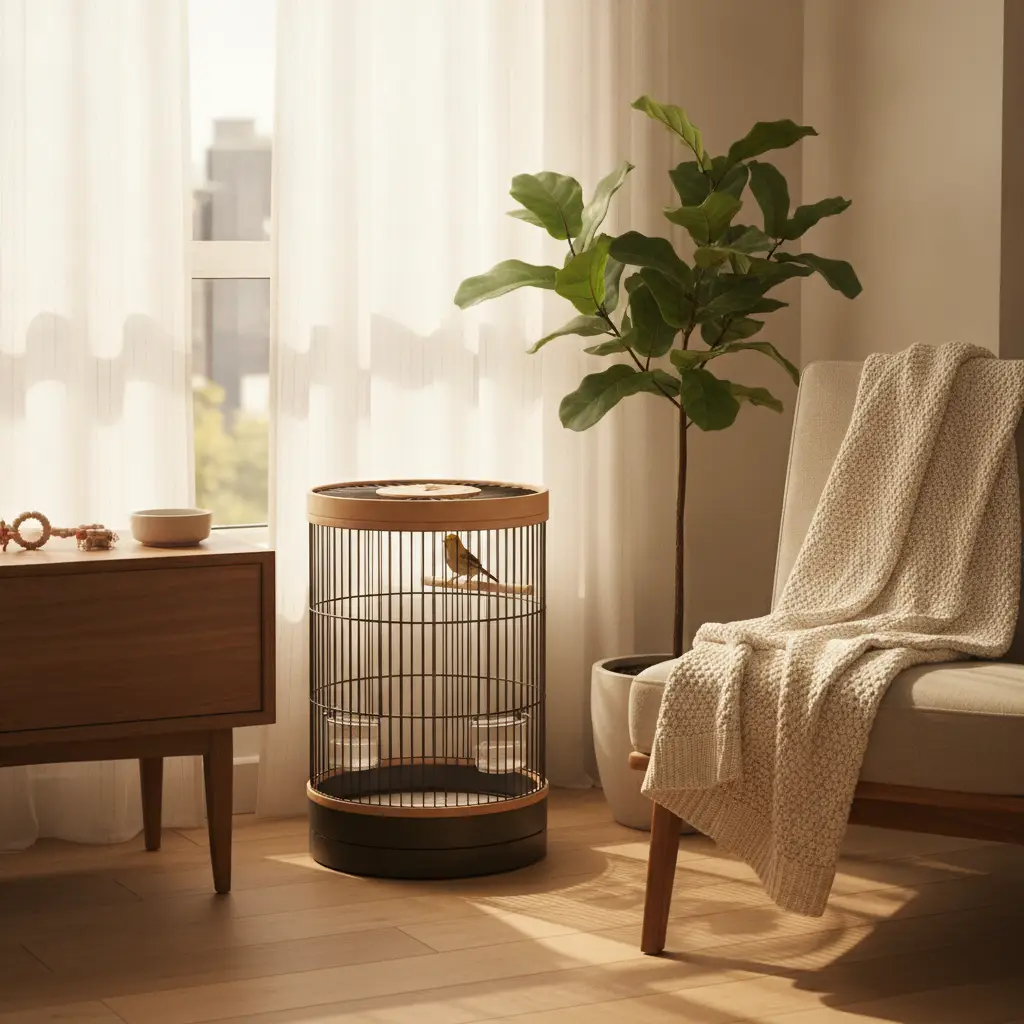
Where you put the cage is almost as important as the cage itself. This is where apartment living gets tricky.
Avoiding Drafts and Temperature Extremes
In apartments, this often means staying away from:
- Frequently opened doors or direct air vents, as sudden temperature swings are a major stressor
- Cold drafts from windows or doors; in winter, consider a bird-safe space heater or warm room placement if needed
- Direct sun, as birds can’t sweat like we do—they overheat quickly, and aluminum or metal cages in direct sun can get dangerously hot, potentially causing panting, lethargy, or dehydration
Light and Sunlight
Air Quality and Ventilation
Birds have delicate respiratory systems.
Noise and Activity Level
Keep the cage away from:
- Appliances like a television, refrigerator, or anything that vibrates or has sound, as televisions can also be noisy and have flickering lights, which is bad for birds
- Loud speakers or audio equipment that could startle or stress your bird
- Areas with heavy foot traffic
Social Placement
This is where apartment living can actually work in your favor.
The key is balance:
Humidity Considerations
This matters especially in apartments with dry indoor heating.
Essential Cage Furnishings and Accessories
The inside of your cage shouldn’t be empty.
Perches
You need at least 3 types of perches.
Toys and Mental Stimulation
Different types of toys serve different purposes:
- Foraging toys encourage birds to work for their food, stimulating their natural foraging instincts, and often include hidden compartments or puzzles that require the bird to find and retrieve treats
- Swings bring gentle motion into the cage just like branches moving in the wind and help birds develop balance and provide entertainment
- Ladders, boings, and climbing ropes add vertical space and give birds a way to travel up, down, and across their home
- Shredding toys made of safe materials like paper, cardboard, or untreated wood can provide both entertainment and mental stimulation
- Bells or chimes can provide auditory stimulation, but ensure the bells are bird-safe and not too loud to avoid stress
Rotate toys regularly to prevent boredom. Introduce one change at a time and give your bird a week to adjust before adding something new.
Food and Water Bowls
Clean and refill them daily—no shortcuts here.
Cage Liners and Maintenance
Night Coverage and Sleep
A simple cage cover or even a lightweight blanket works. The goal is to signal that it’s sleep time and block out household activity.
Apartment-Specific Considerations
Living in an apartment with a bird means thinking about sound, space, and neighbors.
Birds are messy eaters, so plan for cleanup space around the cage.
—
FAQ
Q: What’s the bare minimum cage size I can get away with in a small apartment?
A: Bigger is always better, but never go smaller than the species minimum.
Q: Can I keep a bird cage on a balcony or near a window in an apartment?
A: Not ideal. Indoor placement away from direct window exposure is safer.
Q: How do I keep my apartment bird quiet so I don’t disturb neighbors?
A: Also, choose a quieter bird species for apartment living.
Q: How often do I need to clean the cage?
A:
Q: What temperature should I keep my apartment for a pet bird?
A: