
Mobile Exotic Petting Zoo in Phoenix: Pricing, What’s Included, and How to Book
Introduction
Planning an event in Phoenix and want to add something memorable for your guests? A mobile exotic petting zoo brings the animals directly to your venue—no drive to a facility, no travel stress. Whether it’s a birthday party, corporate gathering, or community event, these services let people interact with animals they’d rarely encounter otherwise. But before you book, it helps to understand what you’re actually getting, how much it costs, and what to look for in a provider. Let’s walk through everything you need to know about exotic pet rentals and mobile petting zoo experiences in the Phoenix area.
What Is a Mobile Exotic Petting Zoo in Phoenix (and Nearby)?
A mobile exotic petting zoo is a traveling animal experience that comes to your location. Instead of visitors going to a fixed facility, trained handlers bring a curated lineup of animals—ranging from common farm animals to more unusual species—directly to your event space. The animals stay in secure, supervised environments during the encounter, and handlers manage all interactions.
These services operate throughout the Phoenix metro area and typically serve a radius that covers surrounding communities. They’re designed to be flexible, fitting into various venue types and event styles.
Mobile petting zoo events vs. exotic animal encounters—what’s the difference?
The terms overlap, but there’s a useful distinction:
- Mobile petting zoo events usually focus on hands-on interaction with a mix of domesticated and semi-tame animals. Guests pet, feed, and handle animals directly under supervision. The goal is tactile, accessible contact.
- Exotic animal encounters may emphasize observation, education, and controlled interaction with rarer or more specialized species. There might be less direct touching and more presenter-led narration about the animals’ behavior, habitat, or care needs.
In practice, many Phoenix providers blend both approaches—offering petting opportunities with common animals and closer (supervised) encounters with more exotic species. Always confirm what “interaction” means for the specific lineup you’re booking.
What happens during a mobile exotic petting zoo interaction?
A typical session follows this flow:
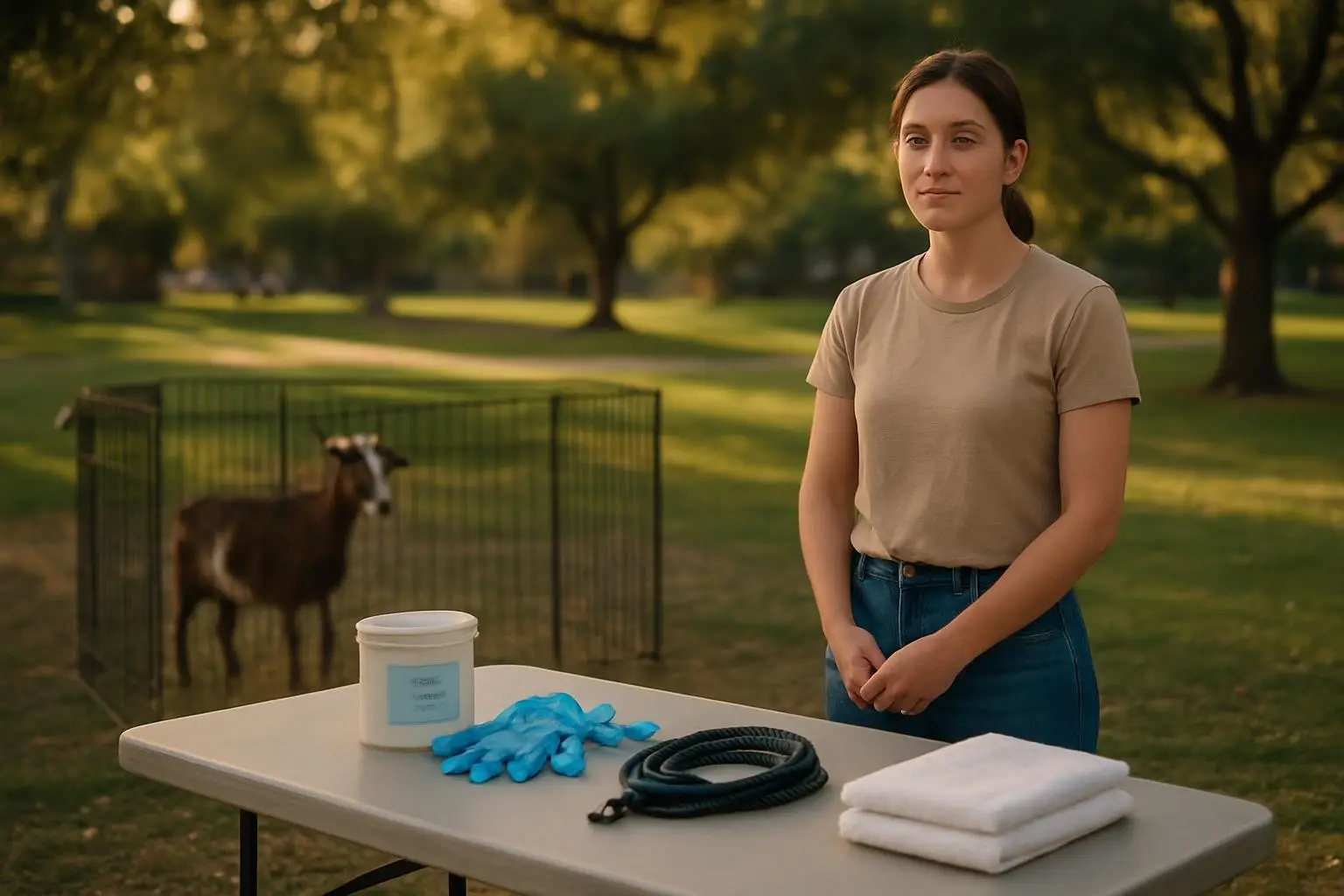
The handler arrives early to set up containment, shade, and water stations. Guests are gathered and given a brief safety talk covering how to approach, pet, and interact with the animals respectfully. The handler then either guides guests through a rotation (where different animals are brought out in turns) or allows a more free-roam setup where animals are in a defined area and guests move around them.
Throughout, the handler supervises all contact, corrects improper handling, and ensures the animals aren’t stressed. Sessions usually include some education—facts about the animals’ origins, diet, behavior, or care. The handler also manages cleanup of any messes and ensures all animals are secure before leaving.
The whole experience typically lasts 45 minutes to 2 hours, depending on the package and guest count.
What’s Included: Typical Animal Lineups for a Mobile Exotic Petting Zoo (Varies)
Every provider’s roster is different, and availability shifts seasonally. That said, most mobile exotic petting zoos in Phoenix offer a predictable core set of animals, with upgrades or specialty options available for a higher fee.
Common “petting” animals you’ll see (goats, pigs, chickens, bunnies)
These are the workhorses of mobile petting experiences:
- Goats – energetic, friendly, and interactive; common in both farm-style and exotic lineups
- Miniature pigs – surprisingly gentle and personable
- Chickens and roosters – low-stress, good for younger kids, teaching about poultry
- Rabbits and bunnies – soft, calming, suitable for gentle handling
- Sheep – similar appeal to goats but often calmer
- Ducks – entertaining and safe for most ages
These animals are hardy, accustomed to being handled by multiple people in a single day, and relatively straightforward to transport. Most providers include at least 4–6 of these in their base package.
Exotic options providers advertise (subject to availability)
Once you step beyond the standard farm animals, the offerings diverge. Common “exotic” upsells include:
- Reptiles (ball pythons, bearded dragons, corn snakes) – typically handled one-on-one, with handler guidance
- Primates (lemurs, marmosets, or smaller monkeys) – less common but available through some providers; higher cost
- Large cats (servals, caracals) – rare and premium; often observation-only or highly controlled
- Exotic birds (macaws, cockatoos, parrots) – interactive and visually striking
- Alpacas and llamas – larger animals, often available for photo experiences
- Hedgehogs, sugar gliders, or exotic rodents – smaller exotics suitable for gentle interaction
- Emus or ostriches – entertaining but require more space and caution
Availability varies week to week and season to season. Some animals may have local licensing restrictions, and others might be booked solid during peak months. Always ask what’s available for your specific date.
How do you request specific animals for a mobile exotic petting zoo?
When you reach out to a provider, mention any must-have animals in your initial inquiry. Most reputable operators will be upfront about what they can guarantee versus what’s “subject to availability.”
- Identify 2–3 animals you’d really like to include
- Ask about availability for your date during the quote request
- Request a confirmed animal list in writing once you’ve booked
- Understand that if a specific animal falls ill or becomes unavailable, the provider will offer a substitution—not a refund
Some providers offer flexible packages (“choose 4 animals from list A, 2 from list B”) so you have some say in the mix. Others have set lineups with paid upgrades for premium animals. Clarify this before committing.
Event Types: When a Mobile Exotic Petting Zoo Works Best
Birthday parties, school events, and community programs
Mobile exotic petting zoos are tailor-made for birthday celebrations. Kids remember an interactive animal experience far longer than a standard party activity. Most providers offer packages specifically for parties—typically sized for 15–50 guests, with flexible durations.
School events and educational programs also benefit from these experiences. Science classes, field days, enrichment assemblies, and recess programs can all incorporate a mobile zoo visit. Providers often adjust their presentation to be more educational (focusing on animal facts, ecosystems, conservation) when working with schools.
Community programs—park district events, library programs, neighborhood festivals—also book these services regularly. Providers often offer discounted rates for nonprofits or public community events.
Corporate events and guest experience programming
Beyond kids’ parties, corporate clients book mobile exotic petting zoos for team-building, client entertainment, office celebrations, and experiential marketing. The novelty and hands-on nature make these experiences memorable for adults too.
Providers typically scale up for larger corporate events, offering longer run times, multiple handlers, and sometimes a structured “education + experience” format that doubles as brand-building content.
How Booking Works for a Mobile Exotic Petting Zoo in Phoenix (Step-by-Step)
Inquiry to deposit: date confirmation and lineup confirmation
The booking process is straightforward but requires some back-and-forth:
Step 1: Submit an inquiry. Contact the provider with your event date, approximate guest count, venue location, and any specific animal requests. Some providers have online booking forms; others prefer a phone call or email.
Step 2: Get a quote. The provider will either send an estimate based on your details or ask follow-up questions (exact date, time window, guest count breakdown by age, special requests, venue details). The quote usually includes a price range and a list of what’s included in that package.
Step 3: Confirm and deposit. Once you’ve agreed on price and details, you’ll sign a booking contract and submit a deposit (typically 25–50% of the total cost). This secures your date and animals.
Step 4: Lineup confirmation. A few weeks before the event, the provider will confirm the final animal roster in writing and may ask for any last-minute changes. This is when you finalize which animals will be present.
Day-of setup, supervision, and cleanup expectations
- Arrive 15–30 minutes early to unload animals, set up containment/staging areas, shade structures, and hand-washing or sanitizing stations
- Conduct a safety briefing with your guests before interactions begin
- Supervise all interactions continuously, adjusting as needed for guest behavior and animal comfort
- Handle all animal care (feeding, watering, rest breaks) during the event
- Clean up afterward, removing all equipment, waste, and ensuring the venue is left as found
You’re responsible for providing a safe venue and communicating any last-minute changes to the handler upon arrival. Most contracts specify that if a guest is injured due to mishandling or failure to follow handler instructions, liability falls on the host.
What you need for the venue: space, ground surface, shade, and guest flow
Before booking, confirm your venue meets these basic requirements:
- Space: A minimum of 15–25 feet of cleared, flat area for setup (exact size depends on animal count and guest count). Larger animals or groups may need 30+ feet.
- Ground surface: Firm, level ground is ideal. Grass is fine; muddy or overly sandy areas can be problematic. Some providers can adapt to concrete or indoor spaces.
- Shade: At least partial shade is critical for animal welfare, especially in Phoenix’s heat. If your venue lacks natural shade, you may need to rent a canopy or tent (sometimes the provider can provide this for an additional fee).
- Water access: Nearby water for animal drinking and handler hand-washing.
- Containment: Any fencing, barriers, or cordoned areas to keep guests at a safe distance from animals during setup and to prevent animals from roaming off-site.
- Parking: Space for the provider’s vehicle and any equipment.
- Restrooms and hand-washing stations: For guests to wash hands after petting animals (or the provider brings a hand-sanitizing station).
Ask your provider to walk through venue requirements during your initial conversation. Some will visit the space beforehand to assess logistics.
Mobile Exotic Petting Zoo Pricing in Phoenix: What Drives Cost?
What “starting at” pricing usually depends on
Providers often advertise “starting at $X” pricing, but this baseline is almost always for their minimal package—usually a 45-minute session with a small guest count (10–15 people) and a limited animal roster. Real-world bookings almost always cost more because circumstances vary.
Main cost drivers: animal mix, guest count, travel, and duration
Several factors push pricing up from that baseline:
- animal selection: Premium exotics (primates, large cats, reptiles) cost significantly more than standard farm animals. Adding even one exotic species can add $100–$300+ to a quote.
- guest count: Larger groups require more handler attention, longer session duration, and sometimes multiple handlers. Pricing often scales in tiers (up to 20 guests, 20–40 guests, 40+ guests).
- travel distance: Providers charge a travel fee for locations outside their primary service area. Phoenix proper is standard; far suburbs or outlying towns may incur $50–$150+ in travel costs.
- duration: A 45-minute session costs less than a 2-hour experience. Longer events mean more animal handling, rest breaks, and handler time.
- setup and special requests: If your venue needs more elaborate setup (outdoor tent rental, special containment, extended breakdown time), that adds cost.
- day and time: Weekend and evening rates are often higher than weekday morning bookings.
What to include in your quote request for accurate pricing
To get a realistic quote, provide:
- Exact date and time window
- Exact guest count (or a reasonable estimate)
- Venue address (for travel calculation)
- Specific animals you’d like (or “surprise us” if flexible)
- Desired duration
- Any special requests (educational focus, photo opportunities, specific setup needs)
- Whether you need the provider to bring shade/shelter or hand-washing stations
The more detail you provide, the more accurate the quote will be. Vague inquiries often result in low “starting at” prices that don’t reflect what you’ll actually pay.
Safety, Animal Welfare, and Compliance: What to Confirm Before Booking
Supervision and guest interaction rules
Before booking, ask the provider to explain their supervision model:
- Are handlers present throughout the entire interaction, or only during setup and breakdown?
- What are the rules for touching, feeding, and handling each animal?
- Are there age restrictions (e.g., children under 5 not allowed to handle certain animals)?
- What happens if a guest ignores instructions or acts aggressively toward an animal?
- Does the handler step in immediately if behavior is unsafe?
A reputable provider will have clear, documented rules and will enforce them. If a provider seems vague or dismissive about supervision, that’s a red flag.
Hygiene expectations and guest guidelines
Ask about health and sanitation practices:
- Do handlers wear gloves? Do they change gloves between guests?
- Are animals bathed or groomed regularly?
- What’s the hand-washing or sanitizing protocol for guests after petting?
- Are there any health or allergy disclosures guests should know about (e.g., animal dander, risk of bites, etc.)?
- Are sick guests or animals excluded from sessions?
Legitimate providers take hygiene seriously and will have a clear protocol. Expect to see hand-sanitizing stations or a nearby sink available throughout the event.
Licensing and permits: what to verify for Phoenix and nearby areas
This is crucial and often overlooked. Before you book, confirm:
- Local licensing: Does the provider hold any required permits or licenses from Phoenix and/or Maricopa County to operate a mobile animal experience?
- Animal permits: Are the animals legal to own and transport in Arizona? Some exotic species require state permits; others are outright prohibited.
- Insurance: Does the provider carry liability insurance that covers guest injuries and animal care incidents?
- Health certificates: Are the animals covered by current veterinary health certificates (especially important for transported animals)?
Ask the provider directly for copies of licenses or permit confirmations before you sign a contract. You can also contact the Arizona Game and Fish Department or Maricopa County Health Department to verify compliance if you’re unsure.
Different venues (public parks, schools, private homes) may have their own rules, too. Check with your venue’s management or landlord before booking to ensure a mobile petting zoo is allowed on the property.
How to Choose a Mobile Exotic Petting Zoo Provider in the Phoenix Area
What to compare: lineup transparency, coverage, reviews, and response time
When evaluating providers, look at:
- Animal roster transparency: Does the provider clearly list what animals they offer? Are there detailed photos or descriptions of each animal’s size, temperament, and handling requirements?
- Geographic coverage: Do they explicitly list Phoenix and surrounding areas as their service zone? Are travel fees clearly stated?
- Reviews and testimonials: Look for detailed reviews (not just 5-star ratings) that mention specific animals, handler professionalism, and whether the experience matched expectations.
- Response time: How quickly do they reply to inquiries? A responsive provider is usually a sign of professionalism.
- Website and communication: Is their site well-maintained and easy to navigate? Do they answer questions thoroughly, or do you feel rushed?
Questions to ask before you book a mobile exotic petting zoo
Use this checklist before committing:
- What animals are guaranteed for my date, and which are “subject to availability”?
- What happens if an animal becomes ill or unavailable? Do I get a substitute or a refund?
- Are handlers present the entire time, and how many handlers will attend my event?
- What is your supervision and safety protocol?
- Do you have current licensing, permits, and liability insurance? (Ask to see proof.)
- What is your cancellation and refund policy?
- Are there any animals I should not request due to local restrictions?
- What does the venue need to provide (space, shade, water, restrooms)?
- Are photos or videos allowed during the event?
- What is included in the quoted price, and what costs extra?
- Can you provide references from recent events?
A transparent provider will answer all of these clearly and in writing.
FAQ
1) Can I rent exotic animals instead of buying them?
Yes. People commonly search for exotic pet rentals in Phoenix as an alternative to purchasing. The availability and legal requirements vary by location and animal species, so it’s important to check with local authorities about what’s allowed where you live.
2) How do exotic pet rentals work?
A mobile petting zoo provider delivers a curated animal experience to your event. You book a specific date, confirm the animal lineup and guest count, and pay a service fee. The provider handles transport, setup, supervision, and cleanup.
3) Are there budget-friendly options for exotic pet rentals in Phoenix?
Yes. Booking a smaller guest count, choosing a shorter duration, sticking to common farm animals, and scheduling on a weekday (rather than a weekend) can keep costs lower. Request quotes from multiple providers to compare.
4) Where can I find exotic pet rentals near Phoenix?
Start by searching for “mobile petting zoo Phoenix” or asking local party planners and event venues for recommendations. Check Google reviews and social media for provider listings in the Phoenix metro area. Confirm they explicitly list Phoenix as part of their service zone.
5) What should I consider before renting an exotic animal for an event?
Verify the provider’s licensing, permits, and liability insurance. Confirm that the animals and rental are legal in your location. Ask about the handler’s experience, supervision practices, and the animals’ welfare during transport and the event.
*This article is for informational purposes and does not constitute professional advice. Always verify local regulations and confirm all details directly with your chosen provider before booking.*