
Indoor Enrichment Ideas for Cats in an Apartment
Apartment living doesn’t mean your cat is stuck watching the same four walls all day. Indoor cats face real challenges—they can’t hunt, climb trees, or roam, which means they miss out on the mental and physical stimulation that keeps them happy and healthy. The good news is that with some thoughtful setup, your small space can become an exciting, engaging world for your feline roommate. What are some practical ways to keep your apartment cat entertained, active, and content?
Vertical Space and Climbing
Cats love to climb and explore their surroundings from different perspectives. Create vertical spaces in your home to satisfy their climbing instincts. Think upward instead of outward. Install cat trees, wall-mounted shelves, or provide sturdy, carpeted perches.
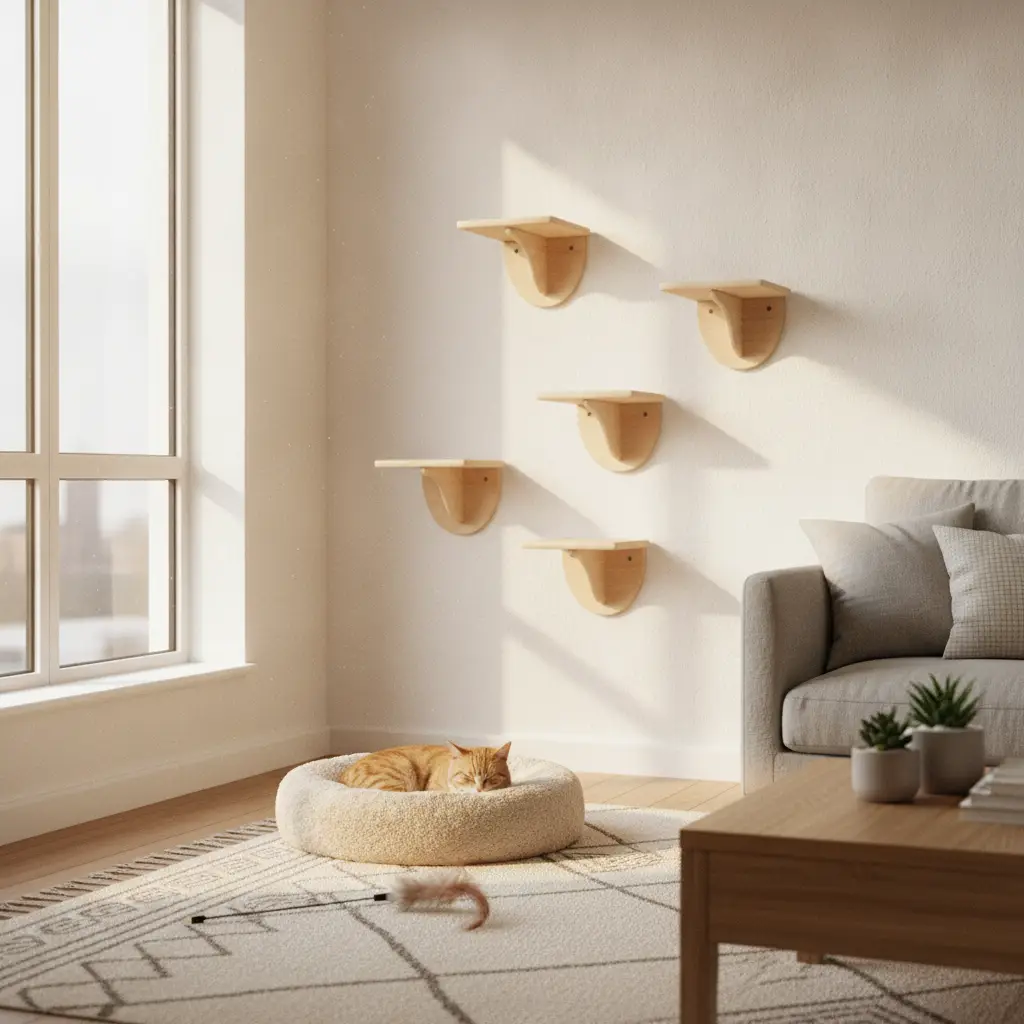
In a rental apartment, wall-mounted options are especially smart because they don’t take up floor space and can be removed or taken with you when you move. Wall-mounted cat furniture utilizes vertical space without consuming valuable floor area. These systems typically include a combination of shelves, bridges, hammocks, and wall-mounted scratching posts that create an engaging climbing course for cats.
Vertical spaces not only offer exercise opportunities but also allow cats to observe their territory, providing mental and physical stimulation and a sense of security. Placing shelves or perches near windows amplifies this benefit, combining climbing with views of the outside world.
Interactive Playtime
No amount of fancy equipment replaces direct interaction with you. Regular interactive play sessions with your indoor cat are vital for their physical and mental well-being. This is where your apartment size becomes irrelevant—quality playtime happens in confined spaces all the time.
Use a variety of toys, such as wand toys or feather teasers to mimic prey-like movements. Engage in play sessions that encourage jumping, pouncing, and chasing, allowing your cat to release energy and express their natural hunting instincts. Even 15 minutes of daily play can make a noticeable difference in your cat’s mood and behavior.
Vary your approach to keep things fresh. Cats love chasing the elusive red dot! Just be mindful to end each laser session with a physical toy or treat that your cat can “catch,” so they don’t become frustrated from the never-ending chase.
Window Perches and Bird Watching
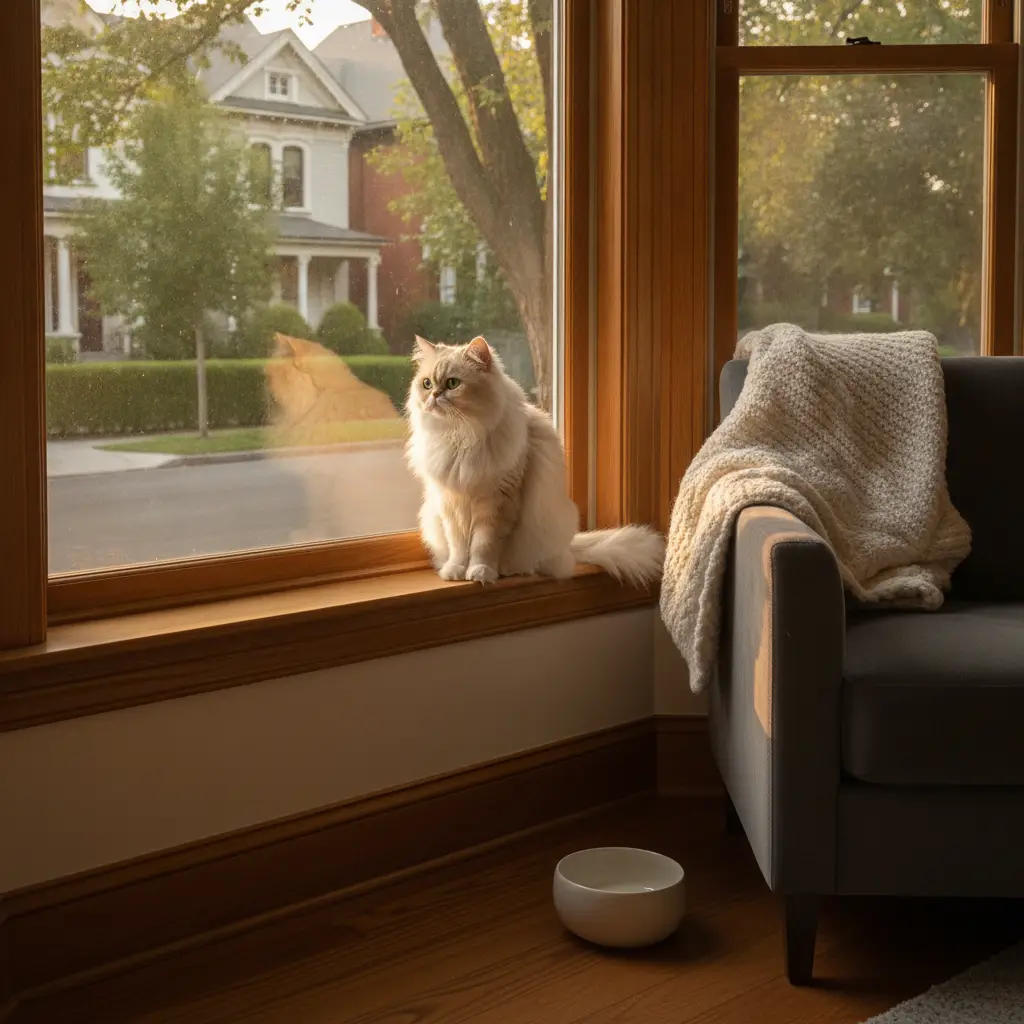
A window perch is perfect to quench your cat’s thirst for curiosity, and eliminate any FOMO they might have. They can sit in the comfort of their own home, but still have a perfect position to survey the outside world from a window sill. This is essentially free entertainment for hours.
To supercharge the experience, place bird feeders or other wildlife attractions within view to entertain your feline friend. This simple activity can provide hours of mental stimulation. Just check your local regulations first, as some areas have restrictions on outdoor feeders.
A window perch requires minimal space and keeps your cat mentally engaged while you’re at work or busy with other things. Even without an outdoor feeder, watching passing people, cars, and occasional birds provides natural stimulation.
Puzzle Feeders and Mental Challenges
Feeding time can become enrichment time instead of a passive moment. Puzzle feeders and interactive toys encourage mental stimulation by making your cat work for their food. Puzzle feeders dispense small amounts of kibble when your cat interacts with them, stimulating their hunting instincts and providing a rewarding challenge.
Mental stimulation is just as important as physical play. Giving your cat puzzles or challenges encourages natural problem-solving instincts and reduces behavioral issues. You don’t need expensive gear either. Get creative by crafting DIY treat dispensers to keep your cat entertained. Simple ideas include stuffing treats inside empty toilet paper rolls or cardboard boxes with small holes. As your cat bats, rolls, and paws at these homemade toys, they will be rewarded with tasty treats, providing mental stimulation and a fun challenge.
Scratching Posts and Surfaces
Scratching is an essential part of a cat’s natural behavior. It helps them mark territory, stretch their muscles, and keep their claws in shape. Without appropriate outlets, your cat will find other surfaces—usually furniture. Providing a variety of scratching posts or mats is key to preventing them from scratching furniture.
Strategic placement matters. Cats often like to scratch when they first wake up, so placing the post near their sleeping area can encourage regular use. You can also use sturdy sisal-wrapped scratching posts that cats prefer, and place them in strategic areas around the house to encourage your cat to use them regularly.
For renters concerned about damage, cardboard scratchers are budget-friendly and easily replaceable. Many come in different shapes or sizes, such as flat pads or incline ramps, adding variety to your cat’s scratching routine.
Safe Plants and Cat Grass
Including cat-safe plants in your apartment offers enrichment for your cat. Plants provide them with interesting places to hide and explore. They also help to recreate their natural habitats in the wild to a certain extent. Just be cautious—many common houseplants are toxic to cats.
You can even plant cat grass for your cat to nibble on. Grow wheat grass for your cat to chomp on to satisfy their instinctive need to chew. You can purchase pet wheat grass kits either online or at pet supply stores. This also helps prevent your cat from chewing on plants you want to keep around.
A small indoor garden doesn’t need much space and gives your cat sensory variety—textures, scents, and the tactile experience of exploring that other cats in apartments might not have access to.
Cozy Hiding Spots and Rest Areas
Not all enrichment is about activity. Cats need secure, quiet places to retreat and feel safe. Calming activities are just as much a part of cat enrichment as stimulating activities. Every animal needs a “comfort zone” where they can go to feel safe and relax.
Closets, open crates, high shelves, cat trees, the space under beds, and rooms sectioned off with baby gates are great places to put a comfy cat bed or blanket to create a safe place. These hiding spots reduce stress and give your cat control over their environment, which is especially important in a shared apartment.
You can DIY these too. You can use boxes, blankets, and T-shirts to create cozy nesting areas without spending extra money. Boxes are particularly valuable—cats have a natural attraction to enclosed spaces, and boxes are free or nearly free.
FAQ
Can cats really be happy living in a small apartment?
Cats often live in small apartments and thrive. You will be pleasantly surprised at how well cats do and how little room they need to be comfortable. The key is consistent enrichment, not square footage.
How much playtime does my apartment cat need?
Most cats need at least 15–30 minutes of active play per day. This can be broken into smaller sessions throughout the day, which works well if you’re busy.
What’s the best way to prevent my cat from getting bored?
Rotate toys weekly so they feel new, combine physical and mental stimulation, and provide multiple types of enrichment. The key to indoor cat enrichment is to tap into your kitty’s natural instincts and keep things fresh and exciting.
Is it renter-friendly to set up all this cat enrichment?
Yes. Removable, temporary options like window perches, standalone cat trees, and free or cheap items like cardboard boxes work without damaging your space. Wall-mounted shelves require basic installation but can be removed, and many landlords are fine with them as long as you fill the holes when you leave.
What if my cat doesn’t care about certain toys or enrichment?
Every cat is an individual and might not always enjoy the same things as other cats. Experiment with different textures, sounds, and types of play. Your cat’s preferences might surprise you, and part of the fun is discovering what clicks for your specific pet.