
Why Your Dog Is Acting Weird After a Move
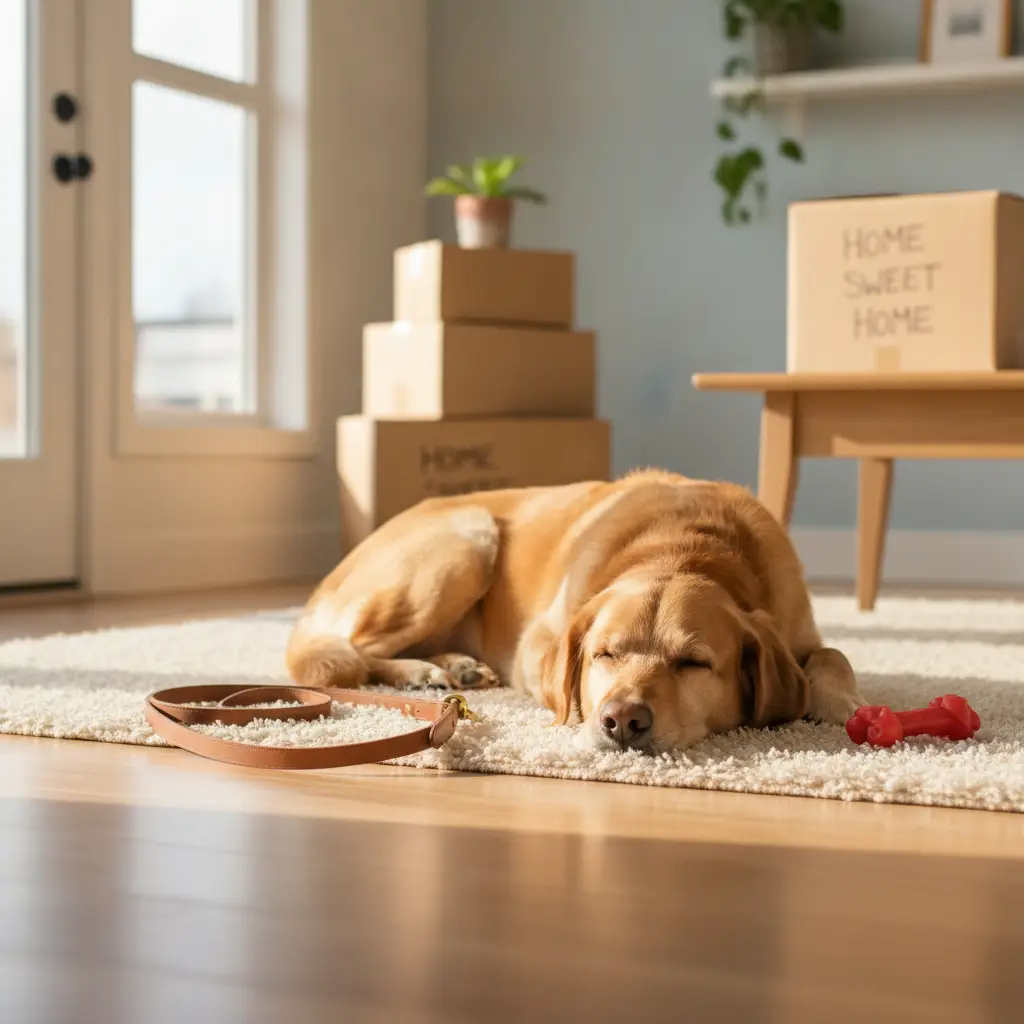
Your dog just lived their entire world in one place—same couch corner, same food bowl spot, same predictable sounds at the same times every day. Then suddenly, everything shifts. The boxes appear, strangers carry things in and out, and when the dust settles, nothing smells or feels like home anymore. That’s when the weird behavior kicks in. If you’re wondering why your dog is acting weird after moving, you’re not alone—and it’s completely normal.
Why Moving Affects Dogs
Dogs know which corner of the couch is theirs, where their water bowl sits, what time the mail carrier arrives, and what every room in the house smells like. A move disrupts all of it at once. Boxes appear, furniture moves, rooms echo differently, strangers carry things in and out, and the smells that defined “home” start disappearing under the scent of packing tape and cardboard.
The core issue is that from their perspective, the world is becoming unpredictable, and unpredictability is the root of most canine stress. Dogs do not understand that this is temporary. You can rationalize the move. Your dog just experiences chaos, confusion, and a complete loss of control over their environment. During a move and while the family is getting settled, daily routines may be disrupted, and dogs can also sense their owner’s stress and anxiety from how hectic a move can be.
Signs Your Dog Is Stressed
Pay attention to these behavioral and physical stress signals:
- Destructive or attention seeking behaviors such as chewing, digging, barking, or even going to the bathroom in your house, something they haven’t done since they were a puppy.
- Panting, pacing, yawning, lip licking, whining, clinginess, and even diarrhea.
- Becoming clingy and following you from room to room. Others become withdrawn, lose their appetite, or start showing behaviors they had outgrown, like accidents in the house or separation anxiety symptoms.
- Ears back, tail tucked, panting, drooling, or even shaking or hiding.
- Reduced interest in their favorite things, a change in sleeping habits, and more lethargy.
Some dogs show one or two of these signs. Others show several. Most dogs adjust to a new home within a few weeks if their routine is maintained and the transition is managed thoughtfully. However, if your dog’s stress symptoms persist beyond two to three weeks, or if they are escalating rather than improving, it is time to get professional support. Persistent house-training regression, destructive behavior, excessive vocalization, refusal to eat, or new separation anxiety symptoms are all signs that your dog needs more than just time.
How to Help Your Dog Adjust
You can’t fast-forward your dog’s adjustment, but you can make it smoother. Here’s what works:
- Maintain routine above all else. Dogs are creatures of habit and the familiarities offer them comfort and security. Keep feeding, walking, and playtime schedules consistent before, during, and after the move. This continuity provides a sense of security amidst the chaos of moving.
- Set up a safe room first. Setting your dog up in a quiet, secure room while moving in can help keep them safe and stress-free as they gradually adjust to the new home. Make this quiet, separate room with their familiar bedding and toys.
- Bring familiar items. Bring your dog’s unwashed bedding and toys into the new home. Familiar scents can provide comfort and help your dog feel more at ease in the new environment. Resist buying new items for your dog and instead continue to use the same high-value items as prior to your move, like feeding bowls, toys, crates, or beds. While new items in a new home may seem like a fun idea, keeping continuity for your dog will help with them adjust to a new environment.
- Gradually introduce the new space. Allow them to choose when and how they venture out. Avoid dragging them into rooms they resist. Instead, lay a familiar toy or blanket in other rooms to encourage positive associations.
- Stay calm and positive. Dogs are sensitive to their owner’s emotions. Maintaining a calm and positive demeanor will reassure your dog that everything is okay.
- Provide mental and physical activity. Take breaks to take your dog for walks or hikes and offer lots of chances for both mental and physical enrichment. Play with their favorite toys and do short training sessions, giving them treats for skills and tricks like roll over or stay.
Give yourself and your dog grace. It will take weeks (not days!), or more likely months, before your dog is fully comfortable in their new environment.
Supplements After Moving
Beyond routine and comfort, some pet parents find that supplements can help support their dog’s stress response during this transition. If you’re considering a supplement approach to help with your dog’s post-move adjustment, your vet is the best starting point. Meeting with your veterinarian to discuss supplements and medications for stress, motion sickness and other concerns is smart before adding anything new.
For Best Supplements for Dogs After Moving, look for options that focus on calming ingredients and general wellness support. Brands like 1800PetMeds offer a broad range of pet supplements where you can get 20% off using code WELCOME20 at checkout. Zesty Paws specializes in functional wellness supplements for dogs, with free shipping on orders $60 or more. BudgetPetWorld offers 12% off sitewide with free shipping, plus extra savings on auto-order if you want to establish a routine supplement schedule. Always check with your vet before starting any new supplement, especially during stressful periods like a move.
P.S. This post contains affiliate links at no extra cost to you. The products featured here consistently showed up as top options during our research, and we aim to provide the most accurate and helpful information possible.
FAQ
How long does it take for a dog to adjust to a new home?
Most dogs adjust to a new home within a few weeks if their routine is maintained and the transition is managed thoughtfully. However, some dogs take longer, and that’s okay. The key is consistency and patience.
Is it normal for my dog to have accidents after moving?
Yes. Dogs that are housetrained can have accidents. Dogs can chew up or rip items when stressed. A dog that is anxious about being left alone may bark or cry when their owner leaves. These are signs of stress, not a regression in training.
What if my dog stops eating after the move?
A change in appetite is a common stress response. Make sure their food and water bowls are in a quiet, safe spot, and offer their regular meals on schedule. If they’re refusing food for more than a day or two, talk to your vet to rule out any medical issues and discuss whether your dog needs additional support.
Can I take my dog to the new place before we officially move?
If possible, yes. Take your dog to the new place a few times before the actual move. Familiarize them with the yard and the neighborhood. Let them explore and get used to all the new smells, sights, and sounds. Pre-exposure helps reduce the shock on moving day.
When should I call my vet about my dog’s post-move behavior?
If your dog’s stress symptoms or behavioral changes persist beyond two to three weeks, or if they’re getting worse instead of better, contact your vet. Also reach out if you notice refusal to eat, severe destructive behavior, or other signs that concern you.